Wet Cupping / Hijama Therapy at Home in Ranchi: Complete Guide to Process, Safety & FAQs
Wet Cupping / Hijama Therapy at Home in Ranchi: Process, Benefits, Safety and What to Expect
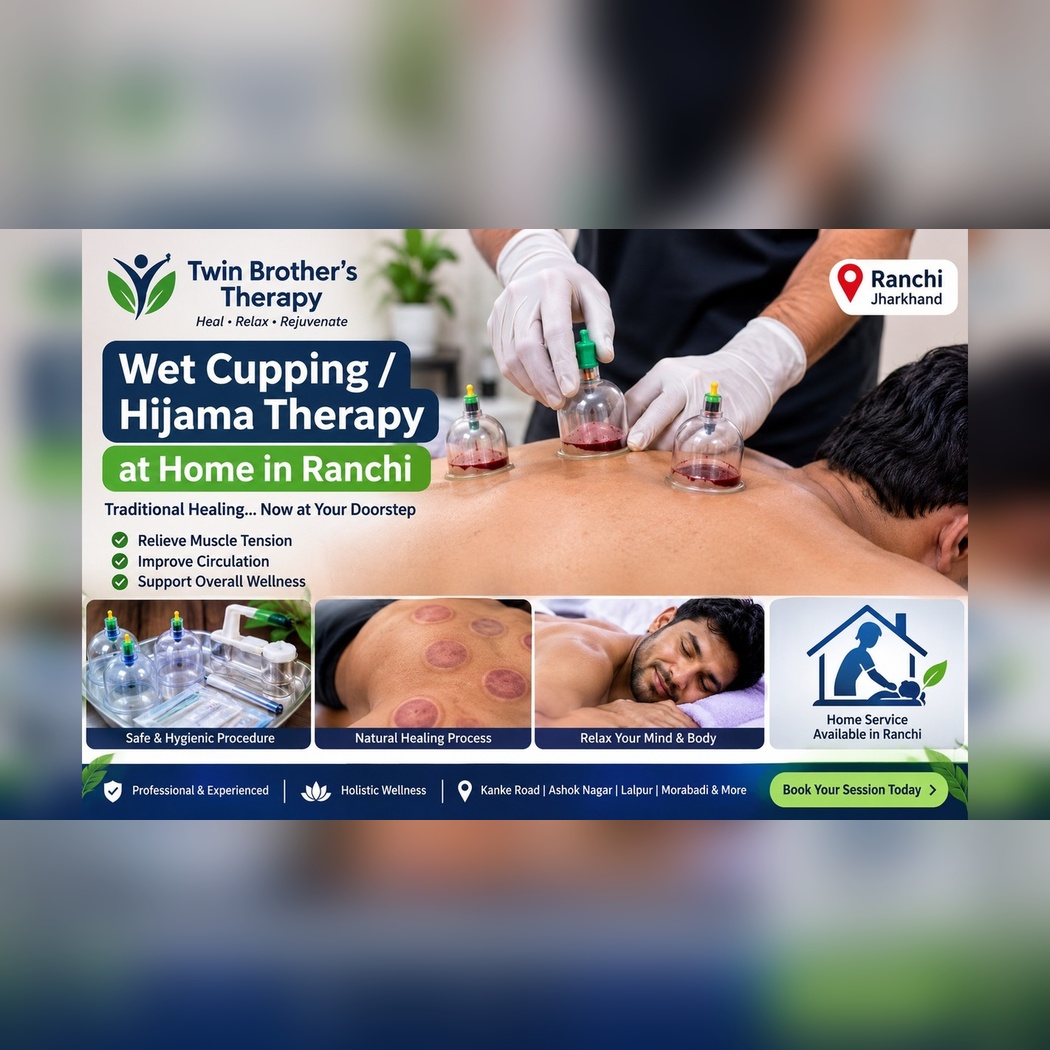
Searching for Wet Cupping or Hijama Therapy at Home in Ranchi? Traditional wellness practices are attracting interest among people who want to explore different approaches to relaxation, physical well-being and muscle discomfort. Hijama, commonly known as wet cupping therapy, is one such traditional practice. It involves applying suction cups to selected areas of the body and making small superficial skin incisions to draw a limited amount of blood into the cups.
For people living in Ranchi, arranging a home appointment can be a convenient option when travelling to a therapy centre is difficult. However, wet cupping is a procedure that requires careful attention to hygiene, professional training, personal health history and aftercare. Understanding how the treatment works, what the available research says and who should avoid it is important before making an appointment.
At Twin Brother's Therapy, we offer massage, cupping and wellness-related services in Ranchi, including home service enquiries. Whether you are exploring Hijama for the first time or looking for a convenient way to enquire about wet cupping therapy at home, understanding the procedure can help you make a more informed decision.
What Is Wet Cupping or Hijama Therapy?
Wet cupping, also known as Hijama or Hijama therapy, is a traditional cupping practice in which suction is applied to selected areas of the skin, followed by small superficial incisions. The suction draws a limited amount of blood into the cup.
Unlike dry cupping, which uses suction without breaking the skin, wet cupping involves controlled skin penetration and therefore requires additional infection-prevention precautions.
Hijama has a long history in traditional wellness practices across different cultures. Today, some people explore it as a complementary approach to managing certain types of discomfort, particularly muscular and musculoskeletal pain.
However, it is important to understand that traditional use does not automatically establish medical effectiveness. Scientific research on cupping is still developing, and the evidence for many claimed benefits remains limited.
How Does Wet Cupping Therapy Work?
A typical wet cupping session involves several stages. The exact approach may vary depending on the practitioner, the equipment used and the individual's suitability for the procedure.
The process generally begins with a discussion about the person's health history, current concerns and expectations. The practitioner should check for conditions or medications that could increase the risk of bleeding, infection or other complications.
Once the treatment area is considered suitable, the skin is cleaned and a cupping cup is placed over the selected area. Gentle suction is applied for a controlled period. The cup is then removed, and small superficial incisions may be made using appropriate sterile, single-use instruments.
A cup is applied again to collect a limited amount of blood. Once the procedure is complete, the area is cleaned, dressed and checked.
Because wet cupping involves breaking the skin, it should never be treated as an ordinary massage. Appropriate protective equipment, sterile instruments, safe disposal of contaminated materials and proper wound care are essential.
What Are the Potential Benefits of Hijama Therapy?
Many people search for Hijama because they have heard about its traditional use for muscle discomfort, relaxation and general wellness. However, it is important to distinguish between traditional beliefs, individual experiences and scientifically established medical benefits.
1. Interest in Muscle Discomfort and Tension
Some people explore cupping therapy as a complementary approach when experiencing muscle tightness or discomfort. Research has investigated its possible effects on different types of pain, including back and neck discomfort.
Some studies suggest potential short-term improvements, but the overall quality of evidence is limited. Wet cupping should not be presented as a guaranteed treatment for muscle pain or an alternative to proper medical assessment.
2. Traditional Wellness Practice
Hijama has been practised in different traditional wellness systems for generations. Some individuals choose it because of personal, cultural or traditional preferences.
For people interested in traditional cupping, understanding the procedure and its possible risks is more useful than relying on exaggerated promises.
3. Personal Interest in Complementary Therapies
People sometimes explore complementary wellness practices alongside their regular health and fitness routines. However, wet cupping is not suitable for everyone, and it should only be considered after an appropriate health assessment.
Does Hijama Remove Toxins From the Body?
This is one of the most frequently asked questions about wet cupping.
There is currently insufficient strong scientific evidence to establish that Hijama removes harmful toxins from the blood or cleanses the body. The human body already has organs, particularly the liver and kidneys, that perform important functions in processing and eliminating waste products.
Therefore, wet cupping should not be advertised as a scientifically proven detoxification treatment.
Why Consider Wet Cupping Therapy at Home in Ranchi?
Finding a suitable therapy service is not only about choosing a treatment. Location, convenience, hygiene, privacy and professional conduct also matter.
For residents of Ranchi, home-based therapy enquiries may be convenient when travelling across the city is difficult or when someone prefers receiving certain wellness services in a familiar environment.
Home appointments can reduce the need to travel to a therapy centre, particularly for people living in areas away from the main commercial locations.
However, convenience should never come before safety. Wet cupping involves blood exposure and skin incisions, so a home environment must be suitable for the procedure. The practitioner should bring appropriate equipment, maintain a clean treatment area and have a safe system for handling and disposing of contaminated materials.
Before confirming a home appointment, customers should ask about the practitioner's training, equipment sterilisation, single-use instruments, protective equipment and aftercare instructions.
Wet Cupping / Hijama Therapy at Home in Different Areas of Ranchi
People searching for Hijama Therapy Near Me in Ranchi may be looking for a service that is accessible without travelling a long distance.
Twin Brother's Therapy serves customers from different parts of Ranchi through its therapy services and home-service enquiries. Depending on therapist availability and the service location, enquiries can be made from the following areas.
Hijama Therapy at Home in Kanke Road
Kanke Road is an important residential and commercial area of Ranchi. People living around Kanke Road who are interested in traditional cupping can enquire about home appointment availability and suitable treatment arrangements.
Wet Cupping Therapy at Home in Ashok Nagar
Ashok Nagar is another location where residents may prefer a convenient home-based wellness service. Those searching for professional Hijama therapy in Ashok Nagar can contact Twin Brother's Therapy to check the availability of home sessions.
Hijama Therapy at Home in Lalpur
Lalpur has a mix of residential areas, educational institutions and commercial establishments. People with busy schedules may prefer enquiring about home services rather than travelling to a therapy centre.
Wet Cupping in Morabadi
Residents of Morabadi searching for wet cupping or traditional Hijama therapy can enquire about available services, appointment arrangements and practitioner suitability.
Hijama Therapy at Home in Bariatu
People living in Bariatu and surrounding residential areas can enquire about home-service availability and the safety arrangements followed during the procedure.
Hijama Therapy in Doranda and Hinoo
For residents of Doranda and Hinoo, home-based therapy enquiries may offer another way to explore traditional cupping services without making an additional trip across Ranchi.
Other Areas Across Ranchi
Home-service enquiries can also be made from Harmu, Ratu Road, Kokar, Khelgaon, Namkum and nearby locations.
Service availability may vary according to the distance, appointment schedule and therapist availability. Customers should confirm their exact location before booking.
What Should You Check Before Booking Hijama Therapy at Home?
Choosing a wet cupping service requires more attention than selecting an ordinary massage appointment. Since the procedure involves blood exposure and breaking the skin, hygiene and professional responsibility are essential.
Before confirming a session, ask the service provider about their relevant training and experience with wet cupping. It is reasonable to request information about their qualifications and the type of procedures they are trained to perform.
The equipment used should be suitable for the procedure. Any blade or instrument that penetrates the skin must be sterile and single-use. Reusing skin-penetrating instruments between clients can transmit serious infections.
The practitioner should also use appropriate gloves and protective equipment, clean the treatment area properly, follow safe waste-disposal procedures and provide clear aftercare instructions.
A responsible practitioner should be willing to discuss possible risks, explain what the procedure involves and advise against treatment when it is not appropriate.
At Twin Brother's Therapy, customers can enquire about the available cupping services and ask questions about the procedure before arranging an appointment.
Who Should Avoid Wet Cupping Therapy?
Wet cupping is not suitable for everybody. Certain health conditions and medications can increase the risk of excessive bleeding, infection, delayed healing or other complications.
People with anaemia, bleeding disorders, low platelet counts or conditions that affect blood clotting should avoid wet cupping unless specifically assessed and cleared by an appropriate healthcare professional.
People taking blood-thinning medicines or anticoagulants should not undergo the procedure without medical advice. Stopping prescribed medication independently to receive Hijama is not safe.
Pregnant individuals, people with significant cardiovascular conditions, those with weakened immunity and people with active skin infections should seek medical advice before considering cupping.
Wet cupping should also be avoided over open wounds, infected skin, burns, irritated areas or other unsuitable treatment sites.
Anyone experiencing fever, unexplained bleeding, severe weakness or an existing medical problem should prioritise medical assessment rather than arranging a traditional wellness procedure.
A professional service should never pressure someone into treatment when their health history suggests that it may be unsafe.
What Happens After a Wet Cupping Session?
After wet cupping, the treated areas may have temporary redness, tenderness, circular marks or minor soreness. Since the skin has been superficially cut, the treated area also requires proper wound care.
The practitioner should explain how to keep the dressing and treatment area clean, when to change the dressing and which symptoms require medical attention.
Avoid scratching or unnecessarily touching the treated area. Follow the specific aftercare instructions provided by the practitioner.
If you notice increasing redness, warmth, swelling, pus, worsening pain, fever or continued bleeding, seek medical attention promptly. These symptoms may indicate a complication or infection.
Recovery experiences differ between individuals. There is no universal recovery time that applies to everyone.
Wet Cupping vs Dry Cupping: What Is the Difference?
Although both techniques use suction cups, the procedures are different.
Dry Cupping: This technique involves placing cups on the skin and creating suction. The skin is not intentionally cut, and no blood is drawn into the cup.
Wet Cupping or Hijama: This technique involves suction followed by small superficial skin incisions. Suction is applied again to collect a limited amount of blood.
The main difference is that wet cupping breaks the skin, making infection prevention, sterile equipment and proper wound care especially important.
Neither method should be selected simply because one sounds more powerful. The suitability of any treatment depends on the individual's health, expectations and professional assessment.
How to Prepare for a Hijama Therapy Appointment at Home
Before arranging a home appointment, discuss your medical history, current medications, allergies and any previous reactions to cupping or similar procedures.
Choose a clean, comfortable area with sufficient lighting and enough space for the practitioner to work safely. Keep children and pets away from the treatment area while the procedure is being performed.
Do not hide medical conditions or medication use from the practitioner. This information can affect whether the treatment is appropriate.
If you are unsure whether wet cupping is suitable for you, consult a qualified healthcare professional before proceeding.
Why Choose Twin Brother's Therapy for Cupping Service Enquiries in Ranchi?
When looking for Wet Cupping or Hijama Therapy in Ranchi, it is important to find a service provider who understands the procedure and takes client safety seriously.
Twin Brother's Therapy is a massage, sports recovery and wellness service provider based in Ranchi, Jharkhand. The centre offers different therapy services, including dry cupping, wet cupping, deep tissue massage and sports massage.
Founded by Kush Kumar, the business focuses on massage therapy, cupping and recovery-related services. It also provides an option for customers to enquire about home-based therapy appointments.
People living around Kanke Road, Ashok Nagar and other parts of Ranchi can contact the centre to understand the available services and check whether home appointments are possible in their area.
Before booking wet cupping, customers should confirm the practitioner's relevant qualifications, the hygiene procedures followed, the use of sterile single-use instruments and whether their personal health history makes the procedure appropriate.
The goal should always be to make an informed decision rather than choosing a service based only on promotional claims.
Frequently Asked Questions About Wet Cupping / Hijama Therapy at Home in Ranchi
1. What is wet cupping or Hijama therapy?
Wet cupping, commonly known as Hijama, is a traditional cupping procedure involving suction cups and small superficial skin incisions. A limited amount of blood is collected through suction. Unlike dry cupping, this technique breaks the skin and requires additional hygiene and safety precautions.
2. Where can I find Hijama Therapy at Home in Ranchi?
You can enquire with Twin Brother's Therapy about home-based Hijama services in Ranchi. Home-service enquiries can be made from locations such as Kanke Road, Ashok Nagar, Lalpur, Morabadi, Bariatu, Doranda, Hinoo, Harmu, Ratu Road, Kokar and nearby areas. Appointment availability should be confirmed before booking.
3. Is wet cupping the same as Hijama?
Yes. Wet cupping is commonly referred to as Hijama. Both terms describe a traditional procedure that uses suction and superficial skin incisions to collect a limited amount of blood. The exact technique and practice may vary between practitioners.
4. What is the difference between wet cupping and dry cupping?
Dry cupping uses suction cups without cutting the skin. Wet cupping involves small superficial skin incisions followed by suction to collect a limited amount of blood. Wet cupping has additional risks related to bleeding and infection.
5. Is Hijama therapy painful?
The experience varies from person to person. Some individuals may experience pressure, skin tightness, mild discomfort or tenderness during and after the procedure. Significant pain is not something that should be ignored. Inform the practitioner immediately if you experience unusual discomfort.
6. Does Hijama remove toxins from the body?
There is insufficient reliable scientific evidence to establish that wet cupping removes toxins from the bloodstream or detoxifies the body. The liver and kidneys perform the body's natural waste-processing functions. Hijama should not be marketed as a proven detoxification treatment.
7. Is wet cupping safe for everyone?
No. Wet cupping is not suitable for everyone. People with anaemia, bleeding disorders, clotting problems, active skin infections or certain cardiovascular conditions may face additional risks. Individuals taking blood-thinning medication and pregnant individuals should seek medical advice before considering the procedure.
8. How long does a Hijama session take?
The duration depends on the treatment area, the individual's suitability and the practitioner's approach. Customers should ask the service provider about the expected appointment duration before booking rather than assuming every session takes the same amount of time.
9. How long do Hijama marks remain on the skin?
Temporary marks, redness and tenderness may occur after cupping. Their appearance and duration vary according to the individual and the technique used. Wet cupping may also leave small healing sites where the skin was superficially cut.
10. Can I book wet cupping therapy at home in Lalpur or Morabadi?
Residents of Lalpur, Morabadi and other Ranchi localities can enquire with Twin Brother's Therapy about home-service availability. The exact address, appointment schedule and service arrangements should be confirmed before booking.
11. What should I do after wet cupping therapy?
Follow the practitioner's wound-care and dressing instructions. Keep the treated area clean, avoid scratching it and monitor for unusual symptoms. Seek medical attention if you experience continued bleeding, increasing redness, swelling, pus, fever or worsening pain.
12. Is Hijama a replacement for medical treatment?
No. Hijama is a complementary traditional practice and should not replace medical diagnosis, prescribed medication or evidence-based treatment. Anyone experiencing persistent or unexplained symptoms should consult a qualified healthcare professional.
13. How can I enquire about Hijama Therapy at Home in Ranchi?
You can contact Twin Brother's Therapy to ask about available wet cupping services, home appointment options, practitioner details and service availability in your locality. It is advisable to discuss your health history and any medical concerns before confirming an appointment.
Book an Enquiry for Wet Cupping / Hijama Therapy at Home in Ranchi
Exploring traditional wellness practices should begin with the right information and a clear understanding of safety. If you are interested in wet cupping or Hijama therapy at home in Ranchi, Twin Brother's Therapy can help you enquire about the available services and home appointment options.
Whether you are located in Kanke Road, Ashok Nagar, Lalpur, Morabadi, Bariatu, Doranda, Hinoo, Harmu, Ratu Road, Kokar or another nearby area, contact the team to check location coverage and appointment availability.
Before arranging your session, ask about the procedure, practitioner training, hygiene standards and whether the treatment is appropriate for your health circumstances.
Twin Brother's Therapy – Exploring Massage, Cupping and Wellness Services in Ranchi, Jharkhand.
Key Takeaways
- •1. Wet Cupping Therapy, also known as Hijama, is a traditional practice that uses suction and small superficial skin incisions.
- • 2. Understand the difference between Wet Cupping (Hijama) and Dry Cupping Therapy.
- • 3. Learn how a typical Hijama session works, from preparation and cupping to aftercare.
- • 4. Discover important hygiene, equipment and safety precautions to consider before booking Hijama. .
- •5. Understand who should avoid wet cupping, including people with bleeding disorders, anaemia or certain medical conditions.
Related Articles
Sound Healing Therapy at Home in Ranchi | Twin Brothers Therapy
Looking for a Sound Healing Therapy Session at Home in Ranchi? Explore singing bowl relaxation and home wellness services with Twin Brothers Therapy.
Ice Bath Therapy at Home in Ranchi | Twin Brothers Therapy
Looking for Ice Bath Therapy at Home in Ranchi? Explore cold-water recovery, potential benefits, safety guidance and convenient doorstep wellness services with Twin Brothers Therapy.
Ayurveda Therapy at Home in Ranchi: Experience Traditional Wellness at Your Doorstep
Looking for Ayurveda Therapy at Home in Ranchi? Explore traditional Ayurvedic massage and convenient home wellness services with Twin Brothers Therapy.