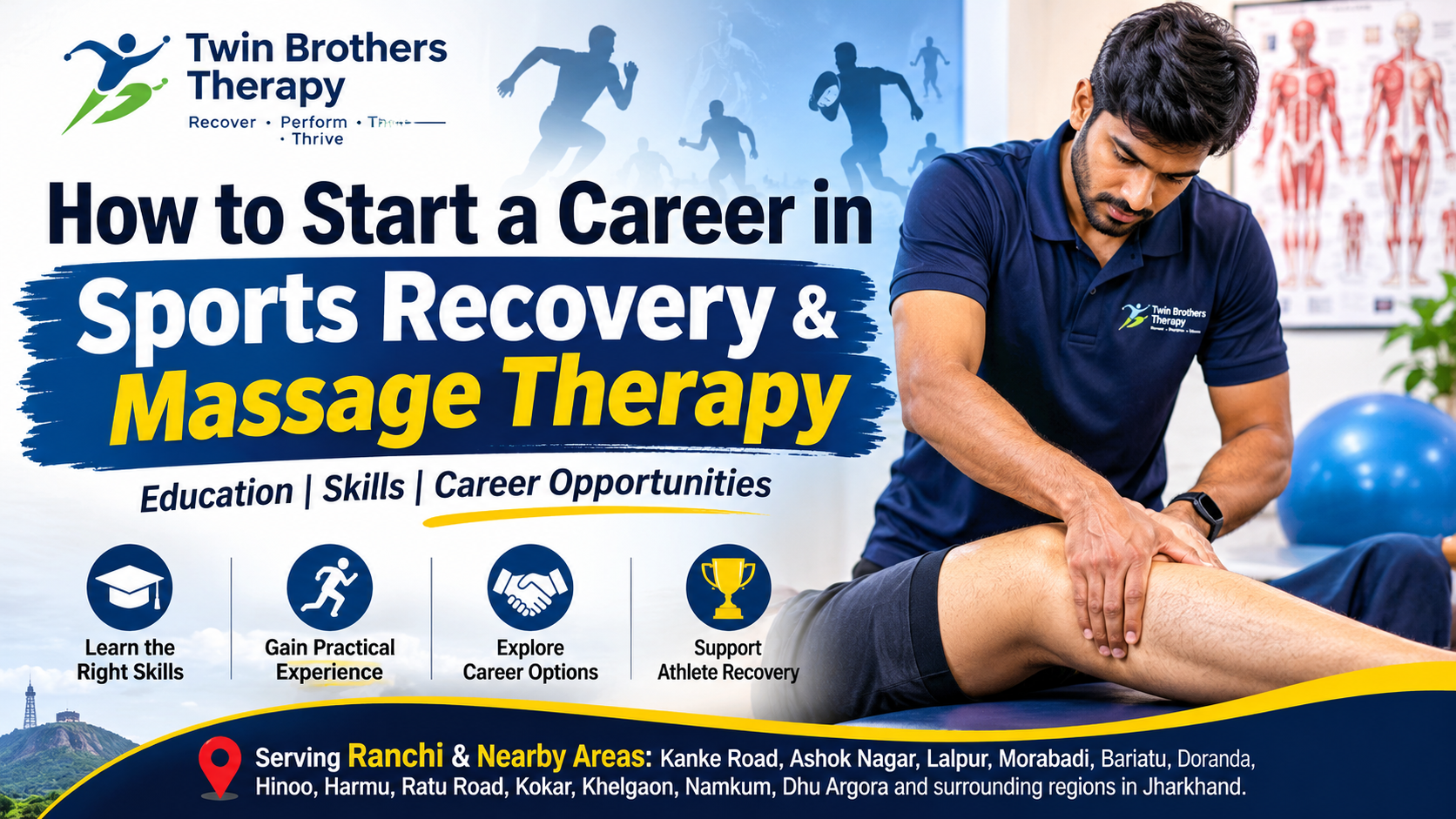
How to Start a Career in Sports Recovery & Massage Therapy
How to Start a Career in Sports Recovery & Massage Therapy
An athlete's routine does not end when training finishes. Recovery and preparation for the next session matter too. For people interested in sport, fitness and helping others, a career in sports recovery and massage therapy may be worth exploring.
The work requires more than learning massage movements. Practitioners need knowledge of the body, supervised practice, communication skills and clear professional boundaries. This guide covers education, experience, workplace options and career planning, with a local focus on Ranchi and nearby parts of Jharkhand. It is intended for beginners who want a realistic picture of the work before choosing a training route.
What Does a Sports Massage Therapist Do?
Sports massage uses hands-on soft-tissue techniques in the context of physical activity. Depending on their training, practitioners may work with athletes around training or competition, or with active people seeking support with general muscle tension and relaxation. They should first understand the client's goals, relevant health history and comfort level.
This role is not the same as diagnosing an injury or providing physiotherapy. Therapists should not promise cures or work beyond their qualifications. Severe, persistent or unexplained pain, swelling, weakness, numbness or a significant recent injury should be referred for assessment by a qualified healthcare professional.
The Sports Authority of India's NSNIS Patiala lists basic and advanced sports massage course admissions. Its advanced course is designed for already qualified massage therapists. Eligibility and availability can change, so applicants should consult the latest official notice.
1. Start with the Right Educational Foundation:
No single course automatically qualifies someone for every sports massage role. Employers and training providers may set different entry requirements. Before enrolling, check who awards the certificate, whether the provider is recognised for that qualification, how learners are assessed and how much practical training is included.
A sound foundation should cover anatomy, physiology, movement, major muscle groups, joints, hygiene, communication, ethics and safe massage practice. These subjects help learners understand the body rather than memorise a sequence of movements. It is also useful to study basic client screening: what to ask before a session, which warning signs mean massage should be postponed, and when to direct someone to a healthcare professional. Learners should understand consent and comfort checks before they begin hands-on practice.
General massage education and specialist sports massage training are not always interchangeable. NSNIS Patiala's advanced sports massage course is intended for qualified massage therapists and lists a basic sports massage course as an entry requirement. This illustrates why it is important to build skills progressively.
2. Choose Training Carefully and Check the Details:
Do not choose a programme only because its name sounds impressive or it promises a quick certificate. Read the syllabus and ask about supervised practice, assessment, trainer experience, recognition and the limits of the qualification.
Check that the course covers anatomy, hygiene, client screening, consent, situations where massage may be unsuitable, and safe handling. Ask whether practical work is observed and assessed, and whether the provider explains when a client should be referred for medical advice. Request the course outcomes and fees in writing.
NSNIS Patiala is part of the Sports Authority of India's academic system and publishes course and admission notices. Its official pages are useful starting points for checking current opportunities; they do not mean all private courses carry the same recognition.
3. Build Practical Experience Under Supervision
Reading is important, but it cannot replace supervised practice. Look for practical classes, supervised placements, observation opportunities or entry-level roles where an experienced practitioner can guide your development.
Learn to prepare a clean space, explain the session, obtain consent, position the client comfortably and check how they respond. Apply only techniques you have been taught and assessed in. More pressure is not automatically better.
With consent, keep accurate and private notes about the client's goals, relevant information, techniques used and response. Beginners should not independently handle complex injuries or medical conditions after simply watching a demonstration. Knowing when to stop and refer is part of professional competence.
4. Develop Knowledge of Recovery, Not Just Massage:
Recovery involves more than massage. Training load, sleep, nutrition, hydration, rest and a person's overall health all matter. Massage may be one option in a wider routine, but it cannot replace these foundations or medical care when needed.
Learn how coaches, sports scientists and healthcare professionals discuss recovery. Understand that ordinary post-exercise soreness is not the same as an injury, and do not diagnose unless you hold the appropriate clinical qualification. This knowledge helps therapists communicate with a wider support team and avoid promises that one session will prevent every injury or guarantee better performance.
5. Strengthen the Professional Skills Clients Notice:
Clients notice how a practitioner listens, explains a session and checks comfort. Use clear language, respect privacy and obtain informed consent before beginning or changing a technique.
Professionalism also means punctuality, clean equipment and linens, hand hygiene, confidentiality, accurate records and honest descriptions of qualifications. Never suggest that you are a doctor or physiotherapist if you are not.
The work can be physically demanding. Good body mechanics, sensible session spacing and attention to personal fitness help protect a therapist's hands, shoulders and back. Appointment management, transparent pricing and customer service are useful skills for independent practitioners. Regular feedback and continuing education can help practitioners notice gaps in their knowledge and keep their approach current.
6. Explore Different Work Environments:
Work settings vary with qualifications and experience. Sports clubs and teams may engage practitioners during training camps or competitions, often requiring coordination with coaches and medical staff. Gyms and fitness centres may serve recreational athletes, while wellness centres, spas and massage clinics may focus on general massage. Recovery studios, home-visit services and independent practice are other possibilities, subject to applicable local requirements and suitable safety arrangements.
The work differs by setting: a spa may focus on relaxation and customer service, while a sports team role may involve training schedules and communication with other support staff. Home visits require particular attention to client screening, personal safety, hygiene and clear appointment procedures. Independent practitioners also need to understand local business requirements, maintain transparent pricing and arrange suitable professional cover where applicable. Read job descriptions carefully and apply only for duties that match your qualifications.
The US Bureau of Labor Statistics also lists self-employment, personal care services and offices of health practitioners as massage-therapy work settings; these are examples, not Indian employment forecasts or licensing guidance.
7. Understand the Career Landscape in Ranchi and Jharkhand
In Ranchi, begin by researching local gyms, sports academies, wellness centres, massage clinics and sports organisations. Ask whether they offer observation or internship opportunities, what qualifications they expect and whether supervision is available.
People around Kanke Road, Ashok Nagar, Lalpur, Morabadi, Bariatu, Doranda, Hinoo, Harmu, Ratu Road, Kokar, Khelgaon, Namkum, Dhu Argora and nearby parts of Jharkhand can use these localities when searching for training and work opportunities. Confirm each provider's address, services and vacancies directly.
Twin Brothers Therapy lists locations on Kanke Road and in Ashok Nagar. Its About page identifies Kush Kumar as its founder and senior therapist, with a focus on deep tissue and sports therapy. This offers a local example of a sports-focused practice. Specific claims about team appointments, certification, guest teaching or client numbers should be supported by records before publication.
8. Make a Realistic Plan for Your First Year:
Make the process manageable. Compare beginner programmes, confirm recognition and assessment, study anatomy and movement, and complete supervised practice before offering services independently. Keep copies of certificates and a record of practical learning.
Then look for an entry-level role that matches your training. Ask for feedback and learn the workplace's safety and documentation procedures. When eligible, consider further sports massage study; the NSNIS advanced course is one example for learners who already have basic massage training. Check the official page for current eligibility and application status.
Do not rush into expensive equipment or advertise techniques you are not trained to provide. A strong reputation comes from safe practice, honest qualifications and steady improvement.
10 Key Points to Remember:
- Choose a course with a clear syllabus and verifiable recognition.
- Learn anatomy, physiology and movement before relying on techniques alone.
- Prioritise supervised, hands-on practice.
- Understand consent, hygiene, privacy and professional boundaries.
- Use pressure and techniques only within your training.
- Know when a client needs referral to a healthcare professional.
- Treat massage as one possible part of a broader recovery routine.
- Explore sports teams, gyms, wellness centres, clinics and independent work.
- Build communication, documentation and business skills alongside technical ability.
- Continue learning and keep evidence of your qualifications and experience.
Conclusion
Sports recovery and massage therapy may suit people interested in sport, movement and client care. A sound start combines appropriate education, supervised practice, anatomy knowledge and professional conduct.
In Ranchi and across Jharkhand, gyms, sports organisations and wellness businesses can help learners understand the local field. Compare training options carefully and build experience step by step. Safe, client-centred practice matters more than a quick certificate or instant-result promises.
Frequently Asked Questions (FAQs):
1. What qualifications do I need to become a sports massage therapist?
Requirements vary by employer and course. Look for training that includes anatomy, physiology, practical massage, hygiene, screening, consent and assessment. Check the current entry requirements of the institution and the role you want to apply for.
2. Can I start learning sports massage after Class 12?
Some training routes may accept school-leavers, while specialist or advanced programmes may require prior massage training or experience. Read the eligibility criteria for each course rather than assuming all programmes have the same entry requirements.
3. Is sports massage the same as physiotherapy?
No. Sports massage focuses on hands-on soft-tissue techniques within the practitioner's training. Physiotherapy is a separate healthcare profession with its own education and scope of practice. A massage therapist should refer clients for clinical assessment when needed.
4. Where can a sports massage therapist work?
Depending on qualifications and experience, possible settings include sports teams, gyms, fitness centres, wellness centres, spas, massage clinics, recovery studios and independent or home-visit practice.
5. Is practical experience important?
Yes. Supervised practice helps learners develop safe technique, pressure control, communication, hygiene and the ability to recognise when a service is not appropriate. Observation alone is not a substitute for assessed hands-on learning.
6. Are there sports massage courses in India?
The Sports Authority of India's NSNIS Patiala publishes basic and advanced sports massage course information. Applicants should check the official admissions page for current notices, eligibility, availability and assessment details.
7. Can I build a sports massage career in Ranchi?
You can research opportunities with local sports organisations, gyms, wellness centres and massage practices in Ranchi. Check each employer's requirements and confirm that your training matches the work being offered.
8. Can massage therapy treat sports injuries?
Massage should not be presented as a cure for sports injuries. A therapist may provide appropriate massage within their training, but injuries and persistent symptoms should be assessed by a qualified healthcare professional.
Sources and References
The following sources were consulted when developing the article.
1. Sports Authority of India – NSNIS Patiala
https://www.sportsauthorityofindia.nic.in/sai_new/nsnis-patiala
Purpose: Institutional background and sports-science education.
2. NSNIS Patiala – Advanced Sports Massage Course
https://nsnis.org/academic-courses/advance-sports-massage-course/
Purpose: Understanding specialist sports massage education and entry requirements.
3. NSNIS Patiala – Admissions
Purpose: Checking official basic and advanced massage course announcements.
4. National Qualification Register – Sports Masseur
https://www.nqr.gov.in/qualifications/3653
Purpose: Reference for the occupational role and competency areas. Note that the listed qualification validity ended on 31 March 2025, so it should not be treated as a current qualification rule without an updated record.
5. US Bureau of Labor Statistics – Massage Therapists
https://www.bls.gov/ooh/healthcare/massage-therapists.htm
Purpose: General information about massage therapist duties, working environments and professional training. US information only; not used to make Indian salary or employment projections.
6. Twin Brothers Therapy – About Us
https://www.twinbrotherstherapy.in/about
Purpose: Business background and the publicly listed professional profile of Kush Kumar.
Key Takeaways
- •Sports massage therapist training
- •ports recovery training in India
- •Athlete recovery
- •Massage therapy skills
- •Sports massage course in India
- •Sports massage therapy in Ranchi
Related Articles
Relaxation Massage in Ranchi for Men: Benefits & What to Expect
Discover relaxation massage in Ranchi for men, its benefits, relaxation techniques, session tips, and professional massage services at Twin Brother’s Therapy.
Deep Tissue Massage in Ranchi : Benefits & What to Expect
Explore deep tissue massage in Ranchi, its potential benefits, safety tips and what to expect at Twin Brother’s Therapy.
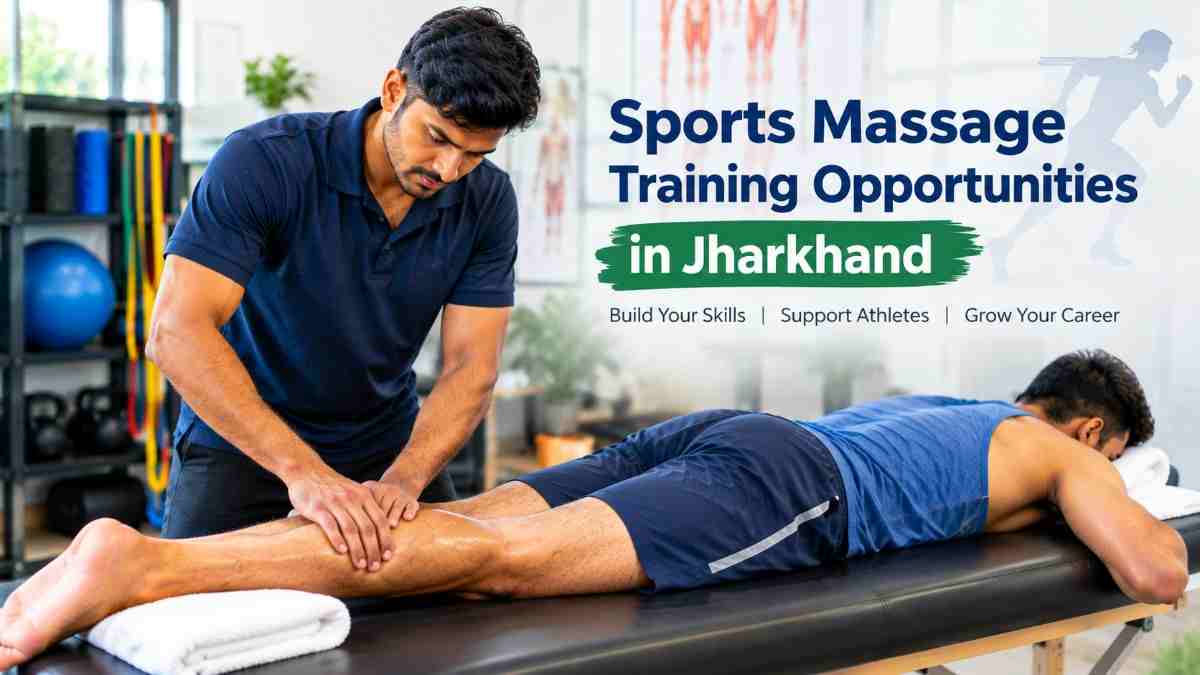
Sports Massage Training in Jharkhand: Courses, Skills & Career Opportunities
Explore sports massage training in Jharkhand, essential skills, course selection, certification checks and career opportunities for aspiring therapists.