Sports Massage Training in Jharkhand: Courses, Skills & Career Opportunities
A student who enjoys sports, fitness, and working with people may eventually consider a career in sports massage therapy. It is an interesting field because it combines practical skills with an understanding of how the human body responds to physical activity.
But choosing this career involves more than learning massage techniques.
Students need to understand anatomy, practise under appropriate supervision, develop communication skills, and learn when massage may be unsuitable for a particular client. They also need to investigate training providers carefully before spending money on a course.
For students searching for sports massage training in Jharkhand, finding reliable information can be challenging. Not every massage course teaches sports-specific techniques, and not every certificate represents the same level of training or recognition.
This guide explains how to research available courses, what students should look for in a training programme, and which professional opportunities they may explore after developing suitable skills.
What Is Sports Massage Therapy?
Sports massage is a hands-on practice used in sporting and physical activity settings. It involves massage techniques selected according to the client's circumstances, the purpose of the session, and the practitioner's training.
For example, an active person may seek massage to address feelings of muscular tightness after demanding exercise. An athlete may also include massage in a broader recovery routine alongside adequate rest, nutrition, hydration, and appropriate training management.
However, sports massage is not a substitute for medical assessment or treatment when an injury is suspected.
A person experiencing sudden pain, substantial swelling, or symptoms following a significant injury may need assessment by an appropriately qualified healthcare professional. A massage therapist should recognise these warning signs rather than attempt to diagnose or treat a condition beyond their competence.
Understanding this distinction helps students appreciate that professional massage involves judgement and responsibility, not simply applying pressure to muscles.
Sports Massage Training Opportunities in Jharkhand
Students researching sports massage courses in Jharkhand should begin by understanding the difference between sports organisations, massage service providers, and institutions that offer structured professional training.
These are separate categories. A sports facility may provide an excellent environment for athletes without offering massage education, while a massage centre may deliver services without running a formal course.
1. Explore the Government Sports Development Network
The Directorate of Sports & Youth Affairs, Government of Jharkhand, works towards developing sports and sporting infrastructure across the state.
Its official website provides information about sports administration, initiatives, facilities, and announcements. Students can monitor relevant updates or contact the department to enquire about appropriate sports-related development opportunities.
However, students should not interpret the department's involvement in sports development as evidence that it offers a sports massage qualification.
Before treating any opportunity as a training option, ask whether a specific programme exists, who delivers it, and how practical competence is assessed.
2. Research Sports Organisations in Ranchi
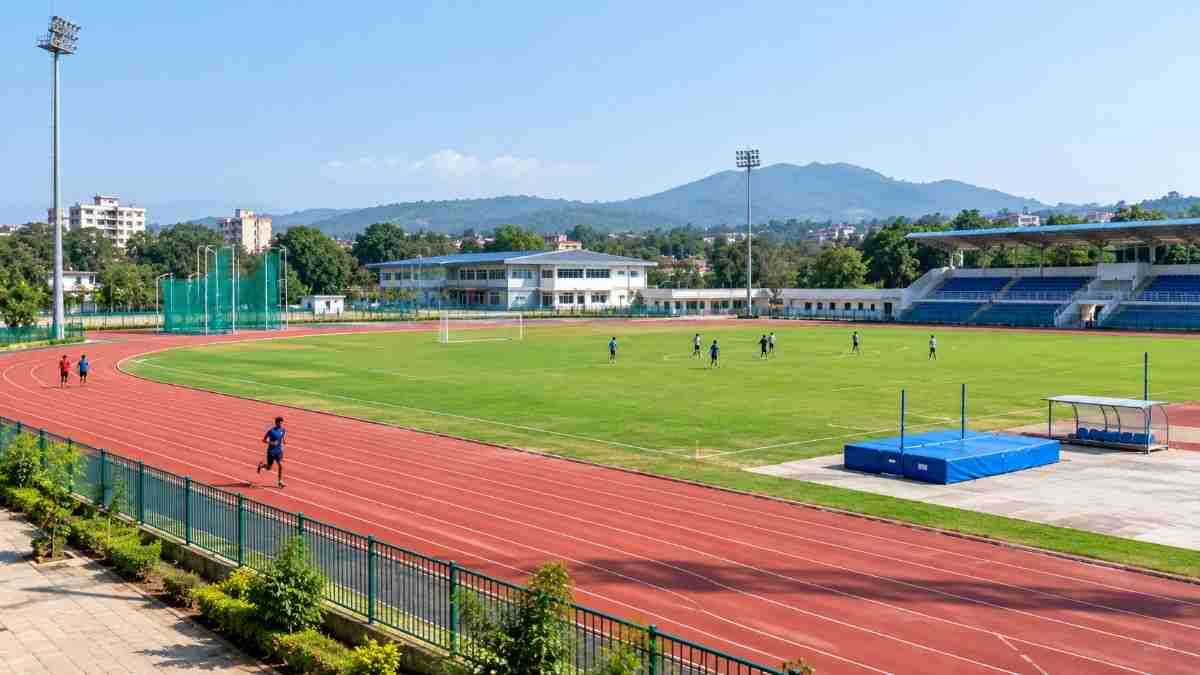
The Jharkhand State Sports Promotion Society is another organisation worth researching. Its official website describes its sports academy and facilities in Ranchi, including infrastructure at the Mega Sports Complex in Hotwar.
For aspiring sports massage therapists, learning about local sports organisations can help develop an understanding of the environment in which athletes train and compete.
Students can enquire whether any relevant observation, networking, or supervised-learning opportunities are available.
Such opportunities must be confirmed directly. The presence of athletes, coaches, or sports facilities does not mean that a formal sports massage course is available.
3. Contact Private Training Providers
Students may also investigate private massage training providers in Ranchi and elsewhere in Jharkhand.
Before enrolling, ask whether the course specifically teaches sports massage or focuses mainly on spa treatments, relaxation massage, or another wellness service.
A provider should be able to explain its curriculum, practical training arrangements, instructor qualifications, assessment process, and certificate-issuing organisation.
Request these details before paying any registration or course fee.
Research finding: The official sources reviewed for this article did not establish an active, dedicated sports massage training programme in Jharkhand. This is a limitation of the available research, not proof that no local provider exists.
A Sports Massage Course Option Outside Jharkhand
Students who cannot identify an appropriate local programme may investigate training opportunities in other states.
One official option is the Basic Sports Massage Course listed by the Sports Authority of India at the Netaji Subhas National Institute of Sports, Patiala.
The published course information describes a three-week programme consisting of one week of online classes and two weeks of offline training. It lists eligibility requirements including a minimum Class 10 qualification, an age range of 18–45 years, and medical fitness. The programme also requires candidates to clear theory and practical examinations to obtain its stated certification.
Students must distinguish published course details from current admission availability.
The institute's 2026 notification specified applications between 7 July and 20 July 2026, with online classes scheduled for 24–29 August and offline classes beginning on 31 August in batches. These dates have passed, and the course page currently displays closed admissions. Prospective students should look for the next official notification before making plans.
The institute also lists an Advanced Sports Massage Course for qualified candidates. Its published criteria refer to previous basic sports massage training or specified professional qualifications, and its course page currently displays closed admissions.
These programmes offer useful examples of structured sports massage education. They are not evidence that every student must study outside Jharkhand, nor do they guarantee employment after completion.
When comparing options, consider the course curriculum, practical hours, assessment, eligibility, travel requirements, accommodation, and current admission status.
What Should Students Learn in a Sports Massage Course?
A good sports massage course should develop the knowledge and practical judgement needed for responsible work.
Human Anatomy and Muscle Knowledge
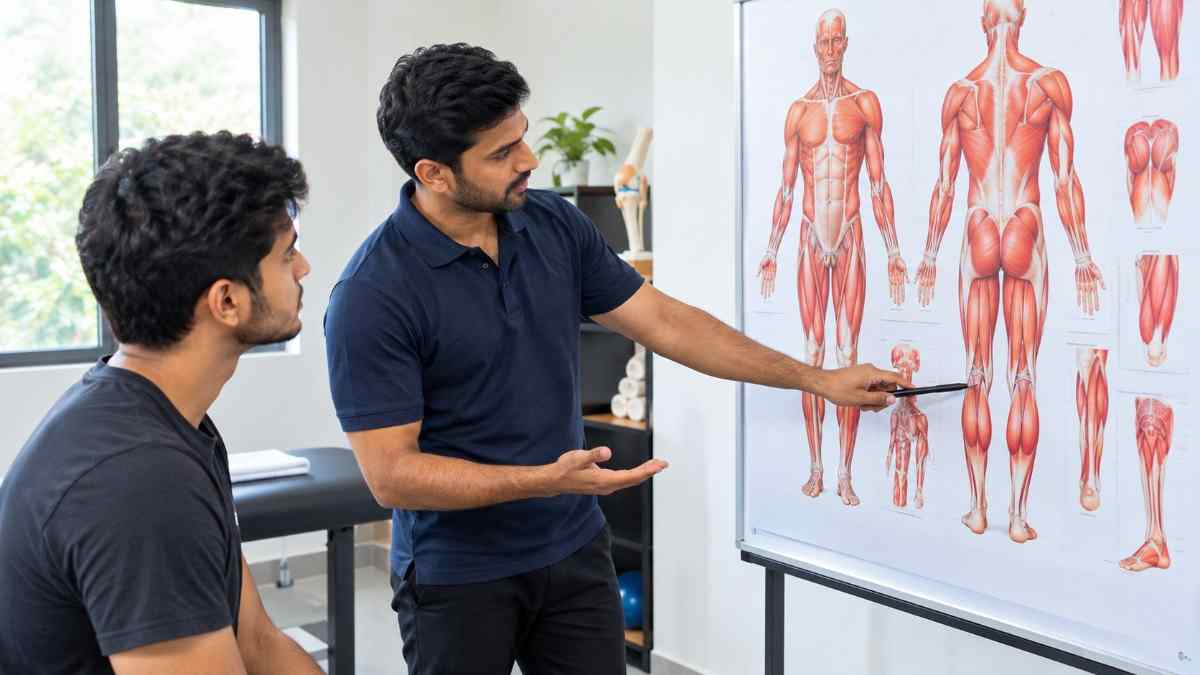
Students should learn about major muscle groups, joints, tendons, and the basic structure of the human body.
This knowledge helps practitioners understand the areas they are working on and recognise why a technique may be appropriate in one situation but unsuitable in another.
Anatomy education also helps students understand the limits of massage therapy. A learner should not assume that every source of discomfort is muscular or that massage is appropriate for every complaint.
Sports Massage Techniques
A course should explain the principles behind its massage techniques, when those techniques may be appropriate, and how their application relates to the client's needs.
Students should learn to adjust their approach rather than assuming that firm pressure always produces better results.
They also need instruction on situations where massage should be avoided or postponed and when a client should be referred for medical advice.
Supervised Practical Training
Practical training deserves close attention when choosing a course.
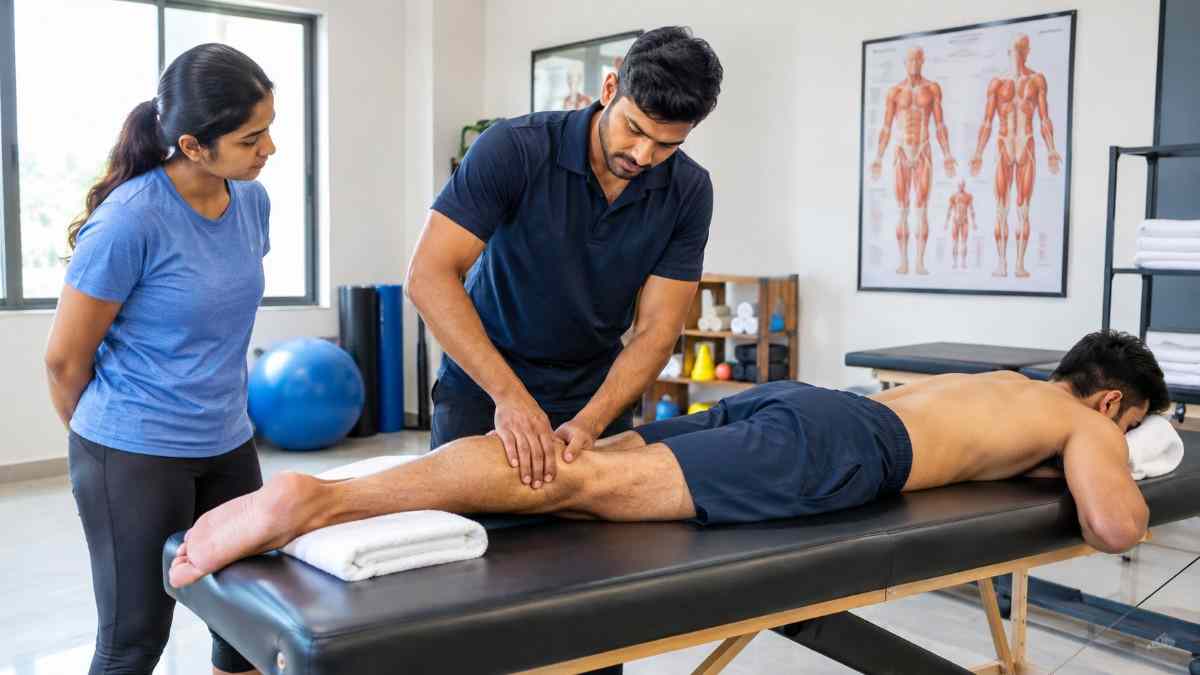
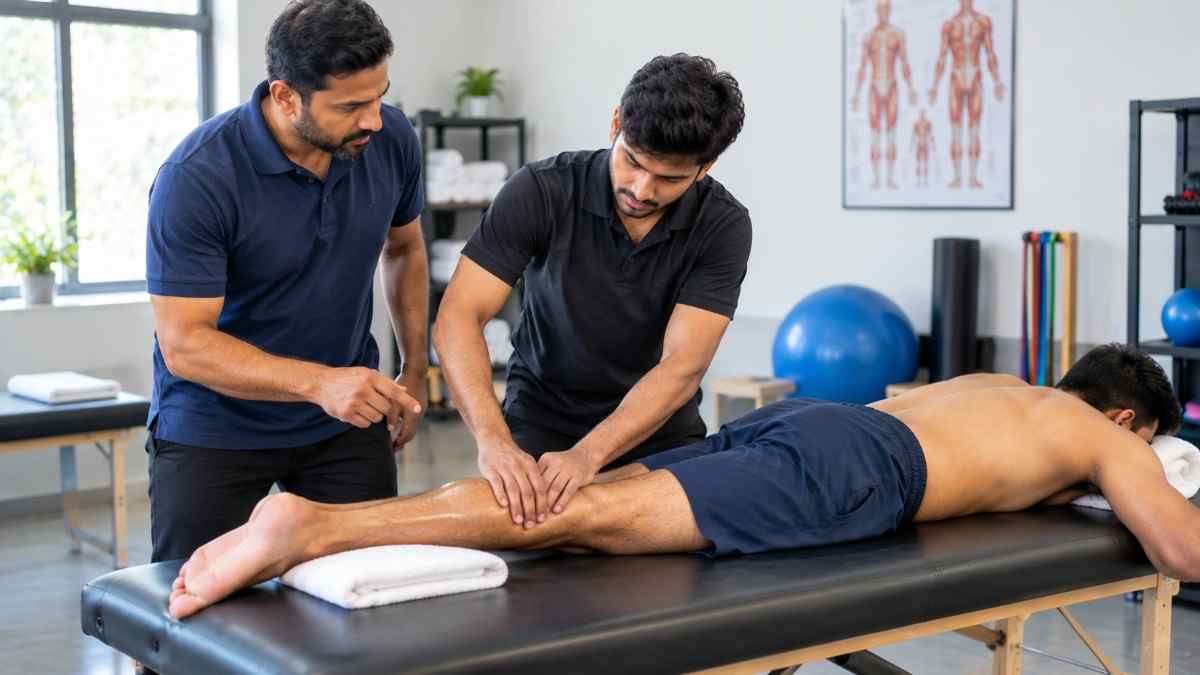
Reading about a technique or watching a demonstration does not automatically prepare a student to perform it safely. Learners need supervised opportunities to practise positioning, hand placement, pressure control, session preparation, and client communication.
A good training provider should explain who supervises practical sessions, how feedback is delivered, and what students must demonstrate before completing the programme.
Before enrolling, ask how much practical work is included and whether students receive individual guidance.
Hygiene, Safety, and Communication
Professional massage requires clean equipment, proper linen handling, a hygienic treatment environment, and respect for client privacy.
Students should learn how to obtain informed consent, explain the planned session, maintain appropriate boundaries, and respond when a client experiences discomfort.
They should also understand the limits of their qualifications and the importance of referring clients to appropriate healthcare professionals when necessary.
These topics should form part of the learning experience rather than being treated as minor additions to massage technique.
How to Verify Sports Masseur Certification in India
Before selecting a training programme, students should find out exactly what its certificate represents.
A certificate issued after attending a workshop may not have the same status as a qualification assessed against a formally recognised occupational standard.
The issuing organisation, assessment requirements, and current recognition status all matter.
Start by asking the training provider who issues the certificate and how it can be verified. Request the name of the awarding organisation and any applicable qualification code.
Next, consult the relevant official register and confirm whether the qualification remains current.
For example, NSDC lists the Sports Masseur qualification, SPF/Q1103, under retired occupational standards. Its guidance states that training should not be undertaken under retired standards. Students should therefore avoid treating this older qualification as a currently valid training pathway without further official clarification.
A training provider should be able to explain its current certification arrangements clearly. Be cautious when a provider relies on outdated recognition claims or avoids questions about assessment and qualification status.
Students should not assume that a certificate automatically authorises them to practise physiotherapy or another regulated healthcare profession.
Career Opportunities After Sports Massage Training
Completing appropriate training may help students begin exploring opportunities in massage therapy and related sporting environments. Actual opportunities depend on their competence, qualifications, experience, and employer requirements.
Sports and Fitness Facilities
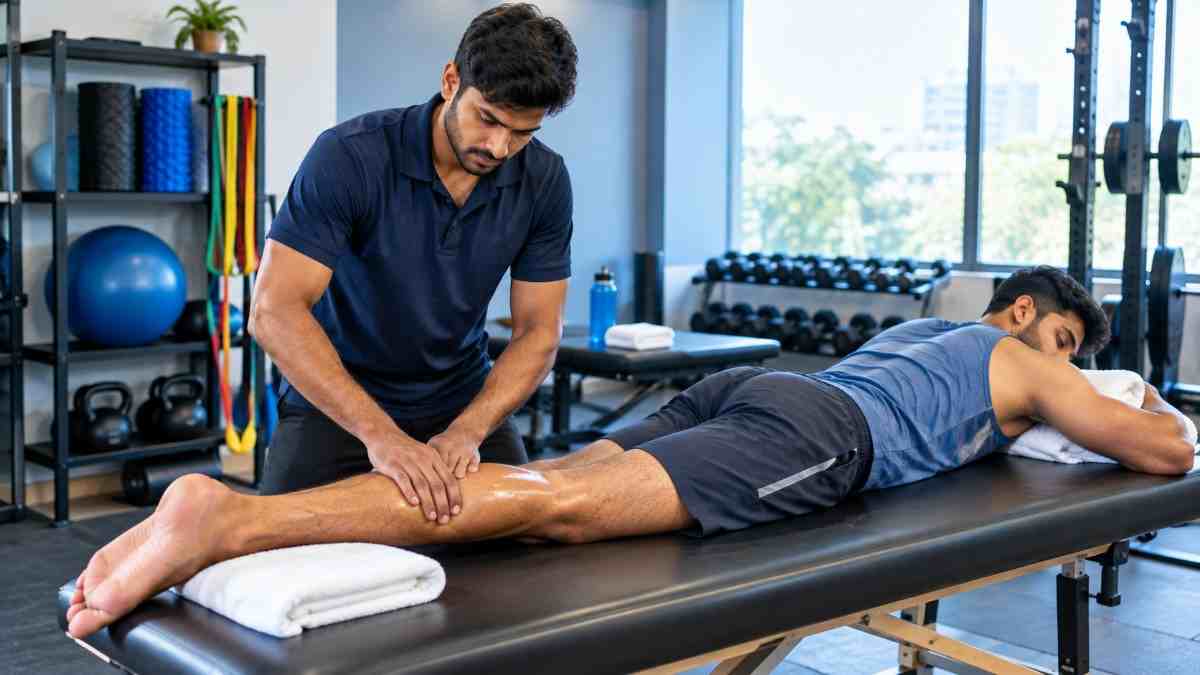
Gyms, fitness studios, and sports facilities are potential environments to investigate.
Some organisations may engage appropriately trained practitioners for sports massage or other recovery-related services. However, students should check whether the work involves sports massage, general wellness services, or a different role.
Sports Teams and Athlete Support
Athletes may work with different professionals as part of their training and recovery routines.
A trained sports massage therapist may be considered for suitable positions where massage falls within their competence and the team's requirements.
Working in such an environment can require strong communication, professionalism, discretion, and an understanding of how to work alongside other members of a sports support team.
Completing a short course does not automatically qualify someone to work with professional or elite athletes.
Massage and Wellness Centres
Massage and wellness centres may provide opportunities for people with relevant training.
The services offered differ from one business to another. Students should confirm that their skills match the employer's expectations and that the position does not require qualifications they do not possess.
Independent Practice
After developing suitable skills and experience, some practitioners may consider offering services independently, subject to applicable requirements.
Independent practice involves more than delivering a massage session. It also requires suitable facilities, hygiene standards, informed consent, communication, appointment management, transparent pricing, and appropriate referral practices.
New graduates should focus on building competence and obtaining appropriate supervised experience before assuming that they are ready to manage every aspect of an independent practice.
Further Professional Development
Some students may decide to expand their knowledge in related areas of fitness, sports support, or recovery.
These are separate educational pathways with their own requirements. A sports massage certificate does not automatically qualify someone as a physiotherapist, sports physician, or other regulated healthcare professional.
Understanding these distinctions helps students choose realistic career goals.
What Should You Check Before Enrolling?
Before committing to a course, take time to compare providers.
First, examine the curriculum. Look for anatomy, practical massage training, client communication, hygiene, safety, and assessment.
Second, investigate the instructor's qualifications and experience. A provider should be willing to explain who teaches the course and how practical skills are supervised.
Third, confirm the certification details. Check the issuing organisation and current recognition status independently.
Fourth, ask about the balance between classroom learning and practical experience. A course that provides little opportunity for supervised practice may not meet your learning needs.
Finally, check the total cost, location, schedule, travel requirements, and any additional expenses. Obtain the complete details directly from the provider instead of relying on an advertisement alone.
These checks can help students make a more informed decision without relying on impressive-sounding claims.
Learning From Experienced Professionals in Ranchi
Local professional networks may help students understand how sports massage is practised outside the classroom.
For example, Twin Brothers Therapy's website describes its work in sports therapy and rehabilitation in Ranchi and identifies Kush Kumar as its founder and senior therapist. This business profile provides local context, but it should not be treated as independent verification of qualifications or evidence that a formal training course is available.
Students interested in learning from an established practitioner should ask about relevant qualifications, supervised practice, teaching experience, and whether a structured training programme is actually offered.
The most useful professional learning environments encourage questions, explain safety principles, and provide constructive feedback.
Conclusion
Sports massage training may appeal to students who enjoy sports, fitness, anatomy, and practical work with people. However, developing a responsible professional career requires more than learning a collection of massage techniques.
For students in Jharkhand, the first step is to research available options carefully. The state's sports organisations provide useful context for exploring the local sporting environment, but students must verify separately whether a provider offers genuine sports massage education.
Where a suitable local programme cannot be confirmed, the official NSNIS Patiala course pages provide one option to investigate. Prospective applicants must check the latest admission notification because the dates published for the 2026 basic course have already passed.
Whatever course you consider, prioritise anatomy knowledge, supervised practical training, qualified instruction, professional safety, and verifiable certification.
A certificate may be one step towards a career, but professional judgement, communication, continued learning, and responsible practice are what students should work towards developing over time.
FREQUENTLY ASKED QUESTIONS
1. Where can I find sports massage training in Jharkhand?
Begin by researching providers in Ranchi and other districts, and monitor relevant announcements from official sports organisations. Confirm directly that a provider offers sports massage training rather than a different massage or wellness course. The official sources reviewed for this article did not establish an active, dedicated sports massage course in Jharkhand.
2. Is there a sports massage training institute in Ranchi?
An active, dedicated sports massage training institute in Ranchi could not be verified through the official sources reviewed. This does not mean that no private provider exists. Contact potential providers and verify their curriculum, practical training, instructor qualifications, and certification arrangements.
3. Does the Sports Authority of India offer sports massage training?
Yes. NSNIS Patiala lists Basic and Advanced Sports Massage Courses. The basic course's published 2026 application dates have passed, and the current course page displays closed admissions. Check the institute's official website for future notifications.
4. What should I look for in a sports massage course?
Look for anatomy education, supervised practical sessions, qualified instructors, hygiene and safety training, clear assessments, and transparent certification details. Verify recognition claims with the relevant official organisation.
5. Why is practical training important?
Practical training allows students to develop technique, pressure control, professional positioning, communication, and safe working habits under supervision. It also helps learners recognise when massage may be unsuitable for a client's symptoms.
6. What career options are available after sports massage training?
Depending on their skills and qualifications, graduates may investigate suitable opportunities in sports and fitness facilities, massage and wellness centres, athlete-support environments, or independent practice. These are potential pathways, not guaranteed employment outcomes.
7. Can a sports massage course qualify me as a physiotherapist?
No. Sports massage training does not automatically qualify someone as a physiotherapist. Physiotherapy is a separate professional pathway with its own educational and professional requirements.
8. How can I check whether a sports masseur qualification is recognised?
Check the relevant official qualification register and awarding organisation. NSDC lists SPF/Q1103 under retired occupational standards, so students should verify current recognition and avoid relying on outdated qualification claims.
VERIFIED RESEARCH SOURCES
The following official and primary sources support the article. Check admission notices and qualification information again immediately before publication.
1. Directorate of Sports & Youth Affairs, Government of Jharkhand
Information about the state's sports development network.
Official Jharkhand Sports Department
2. Jharkhand State Sports Promotion Society
Official information about its sports academy and facilities.
Jharkhand State Sports Promotion Society
3. NSNIS Patiala — Basic Sports Massage Course
Published duration, eligibility, programme structure, and admission status.
Official Basic Sports Massage Course page
4. NSNIS Patiala — Basic Sports Massage Course Notification, 2026
The dated notice provides the 2026 application window and course schedule. Those dates have passed.
Official Basic Sports Massage Course notification
5. NSNIS Patiala — Advanced Sports Massage Course
Published programme and eligibility information.
Official Advanced Sports Massage Course page
6. Twin Brothers Therapy — About
The business's own profile provides background on its sports therapy and rehabilitation services in Ranchi. Treat professional credentials and experience claims as self-published until independently verified.
Twin Brothers Therapy professional profile
Key Takeaways
- •Sports massage training in Jharkhand
- •Sports massage course in Jharkhand
- •Sports massage training in Ranchi
- •Sports massage therapist course in India
- •Athlete recovery training
- •Massage therapy career in Jharkhand
Related Articles
Massage Therapy Certification in India: What Students Need to Know
Learn about massage therapy certification in India, trainer qualifications, practical training, certificate credibility, and how to choose suitable training.
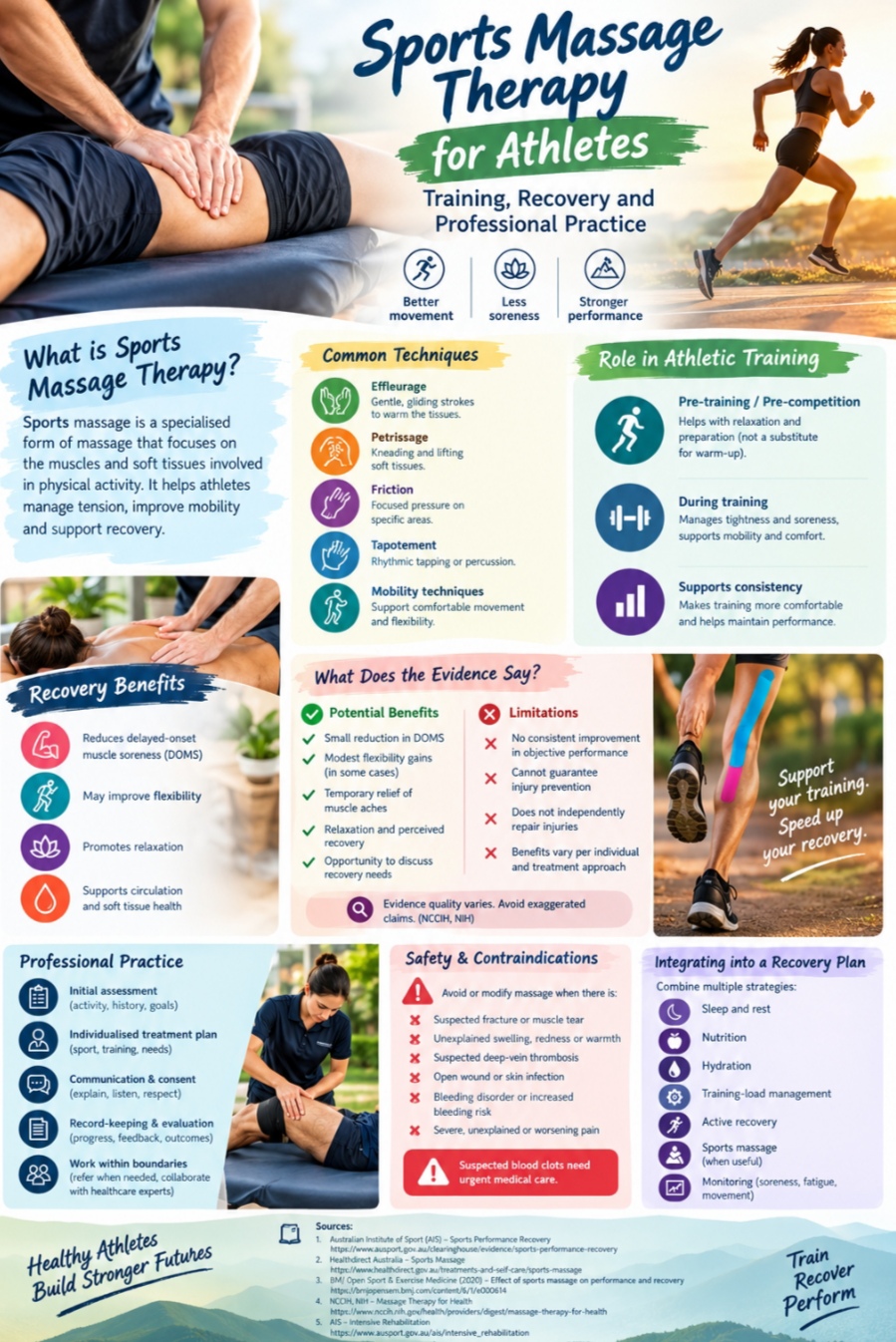
Sports Massage Therapy for Athletes : Recovery and Training
Sports Massage therapy for Athletes: training , Recovery And Professional Practice.Athletes constantly challenge their bodies. Whether a person is pre
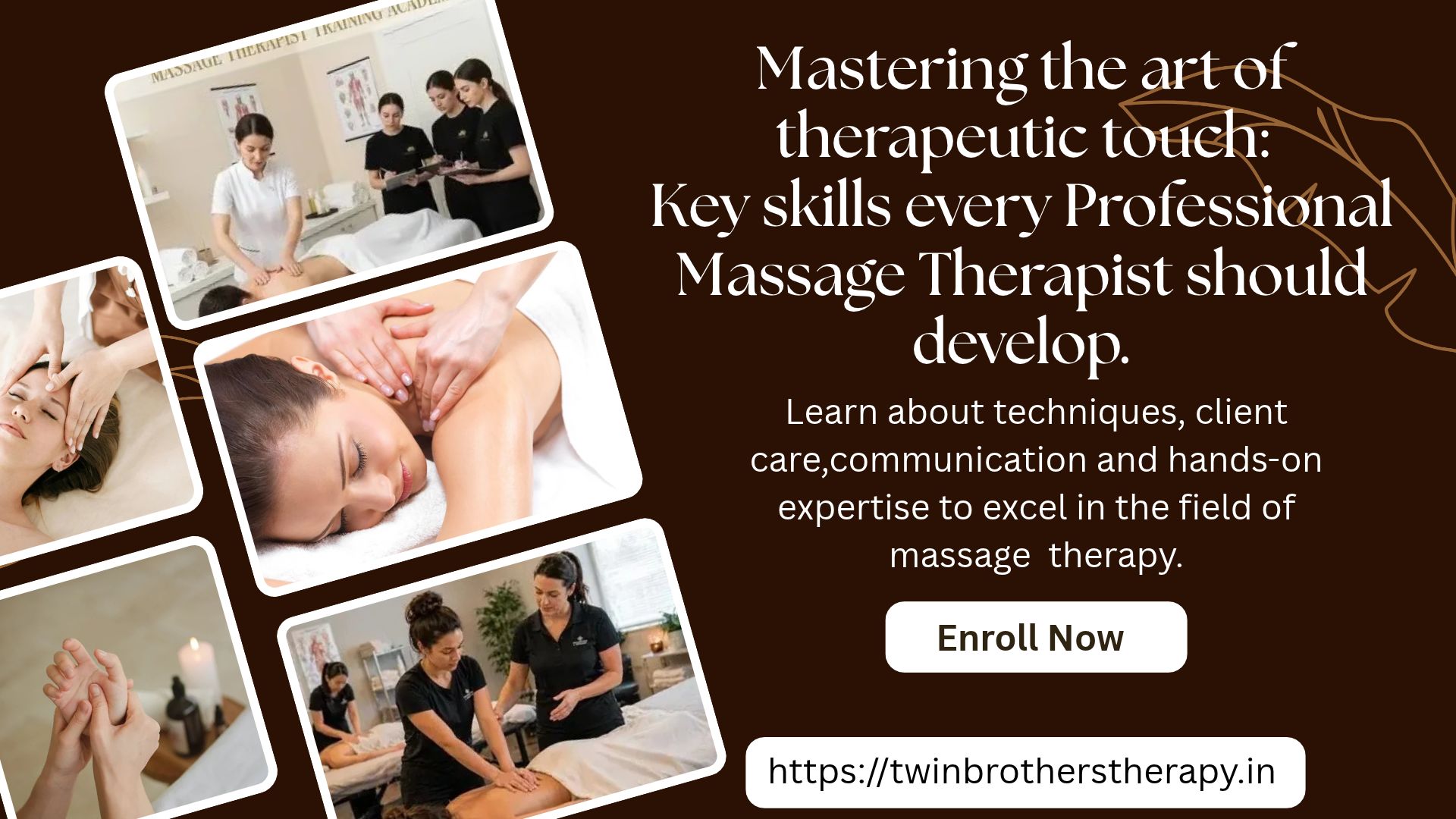
Essential Skills Every Professional Massage Therapist Needs to Master
Want to excel in your massage career? Discover the essential technical, communication, and professional skills required to become a standout, trusted massage therapist.