Professional Massage Therapy: Skills, Training & Real-World Experience Explain what students should learn to develop a professional career in massage therapy.
- Professional Massage Therapy: Skills, Training & Real-World Experience
URL Slug: professional-massage-therapy-skills-training-experience
Primary Keyword: Professional Massage Therapy
Secondary Keywords: Massage Therapy Training, Massage Therapist Skills, Massage Therapy Career, Practical Massage Training, Sports Massage Therapy, Massage Therapist Certification
Professional Massage Therapy: Skills, Training & Real-World Experience
Professional massage therapy combines practical skills, knowledge of the human body, client communication, and responsible professional practice. For students interested in wellness services, sports recovery, or muscular care, developing these skills can provide a foundation for a career in massage therapy.
Becoming a professional massage therapist involves more than learning massage techniques. Students need to understand anatomy, recognize individual client needs, maintain hygiene, respect personal boundaries, and know when a client should be referred to an appropriate healthcare professional.
Practical training and supervised experience are also important. They allow students to apply what they learn, receive feedback, and improve their technique before working independently.
This guide explains the key skills, training considerations, and real-world experience that aspiring massage therapists should develop to prepare for professional work.
What Is Professional Massage Therapy?
Professional massage therapy involves applying appropriate manual techniques to soft tissues, such as muscles, with consideration for the client's needs, comfort, and safety. Depending on the therapist's training and scope of practice, massage may be used in wellness settings, relaxation services, muscular care, and sports-related recovery routines.
A professional therapist does not use the same approach for every client. The techniques and pressure selected should take account of the client's preferences, relevant health information, comfort level, and the therapist's training.
Professional practice also requires clear communication, informed consent, suitable hygiene procedures, accurate recordkeeping where appropriate, and respect for client confidentiality.
Why Professional Skills Matter
Good technique is only one part of delivering a professional service. A therapist also needs to understand how to prepare a session, explain the process, check client comfort, and respond appropriately when a technique is unsuitable.
Developing these skills helps students build a responsible approach to their work and prepares them for different professional environments, including wellness centres, spas, fitness facilities, and sports-related settings.
Essential Skills Every Massage Therapy Student Should Learn
Students should build their skills gradually through theoretical learning, demonstrations, supervised practice, and feedback.
1. Human Anatomy and Basic Physiology
Understanding the human body is a fundamental part of massage therapy education. Students should learn about major muscle groups, bones, joints, soft tissues, and the basic functions of body systems relevant to their training.
Anatomical knowledge helps therapists understand the areas they are working on and select appropriate techniques. It also helps them recognize when pain, swelling, injury, or other symptoms may require professional medical assessment rather than massage.
Students should pay particular attention to:
Major muscle groups and their locations.
Basic muscle function and movement.
Joint structure and range of motion.
The difference between ordinary muscle tension and symptoms that require further assessment.
Situations in which massage may be inappropriate or require additional precautions.
2. Massage Techniques and Practical Application
Students need opportunities to learn and practise techniques under suitable supervision. Depending on the course and professional pathway, these may include basic relaxation massage, effleurage, petrissage, and other approved manual techniques.
The objective is not simply to memorize movements. Students should learn how to apply techniques with controlled pressure, appropriate body mechanics, and attention to client feedback.
A professional approach includes:
Choosing techniques appropriate to the session's purpose.
Maintaining comfortable and safe working positions.
Adjusting pressure in response to client feedback.
Avoiding forceful techniques outside the therapist's training.
Reviewing technique with a qualified instructor.
Students interested in sports massage should also learn how sports-related massage differs from general relaxation services and why an athlete's training load, symptoms, and recovery needs must be considered.
3. Client Assessment and Communication
Before a session, a therapist should understand the client's goals, preferences, relevant health information, and any concerns that could affect the suitability of massage.
Students should practise asking clear, respectful questions and explaining what a session may involve. They must obtain informed consent, protect privacy, and allow clients to stop or change the session at any time.
Good communication includes listening carefully, explaining pressure levels, checking comfort, and avoiding promises of guaranteed results.
4. Hygiene and Client Safety
Hygiene and safety are essential professional responsibilities. Students should learn how to clean and prepare the treatment area, use fresh linens, maintain hand hygiene, and follow appropriate equipment-cleaning procedures.
They should also understand contraindications and precautions. Certain symptoms or health conditions may require a session to be postponed, modified, or discussed with an appropriate healthcare professional.
Students must never diagnose medical conditions or claim that massage can cure an injury or disease unless such a statement is supported by appropriate evidence and falls within the relevant professional scope.
5. Professional Ethics and Boundaries
Professional massage therapy requires trust and respect. Students should learn about informed consent, confidentiality, appropriate draping, professional conduct, and the importance of maintaining clear boundaries.
They should also understand that a client's personal information must be handled responsibly and that photographs, testimonials, or case details should not be shared without appropriate permission.
Ethical behaviour supports a safer environment for clients and helps establish a trustworthy professional reputation.
What Training Should Aspiring Massage Therapists Look For?
The right training programme should combine theoretical education with practical instruction. Students should review a course's curriculum, teaching methods, instructor qualifications, supervised practice opportunities, and assessment process before enrolling.
Classroom Learning and Practical Demonstrations
Classroom learning provides a foundation in anatomy, basic physiology, hygiene, safety, communication, and professional ethics. Demonstrations help students understand how techniques are performed and how therapists position themselves during a session.
However, watching a demonstration is not the same as being able to perform a technique correctly. Students need structured practice and feedback to develop consistent skills.
Supervised Hands-On Practice
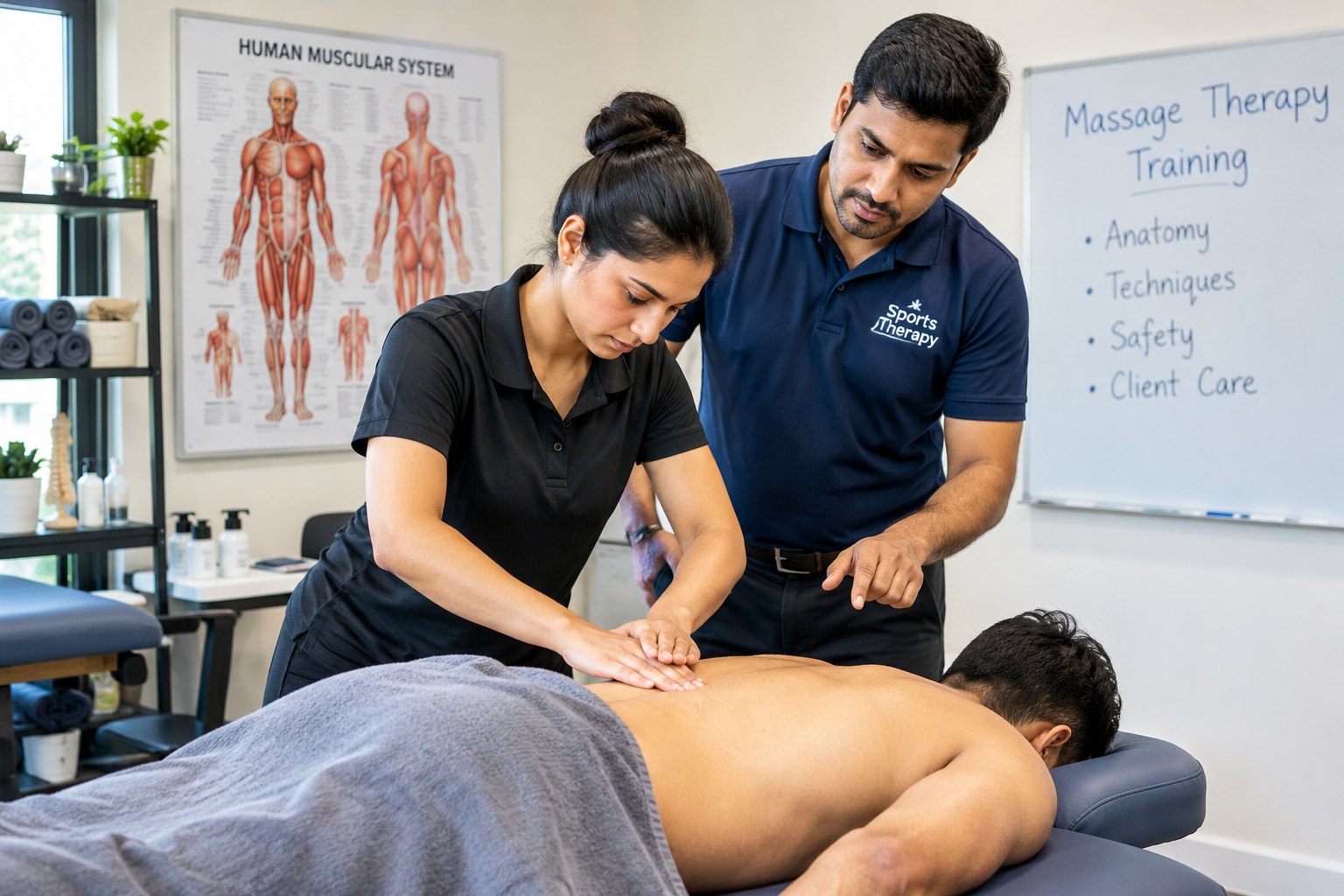
Supervised practical sessions give students opportunities to apply techniques in a controlled learning environment. Instructors can identify incorrect posture, excessive pressure, poor hand positioning, or gaps in communication.
Students should receive feedback, practise corrections, and demonstrate that they understand the relevant safety procedures before progressing to more independent work.
Certification and Professional Development
Before selecting a course, students should check whether the training provider is reputable and whether the certificate is recognized for their intended career pathway. They should confirm the course duration, practical training hours, assessment requirements, and any applicable local rules.
A certificate alone does not automatically establish competence. Professional development should continue after training through further learning, supervised experience where needed, and regular review of current practices.
How Real-World Experience Develops Professional Confidence
Real-world experience allows students to understand how massage therapy works beyond the classroom. It can teach them to communicate with different clients, manage session time, maintain professional standards, and respond to feedback.
Learning Through Supervised Practice
Students can develop experience through supervised clinic sessions, approved placements, demonstrations, or practical training arrangements offered by their education provider.
During this stage, students should learn to prepare the treatment space, discuss client preferences, explain the session, maintain hygiene, and document relevant information where appropriate.
They should not perform techniques beyond their training or take responsibility for clients whose needs exceed their competence.
Understanding Different Client Needs
Clients may seek massage for relaxation, general muscular comfort, wellness routines, or support alongside sports training. Their needs and preferences can differ considerably.
For example, an office worker may prefer a relaxation-focused session, while an athlete may ask about massage in relation to training and recovery. The therapist must assess the request appropriately, explain the limits of the service, and select techniques within their training.
Students should avoid assuming that every client with similar symptoms needs the same approach.
Learning From Feedback and Mentorship
Feedback from instructors, experienced therapists, and clients can help students identify areas for improvement. A student may need to work on posture, pressure control, communication, session planning, or time management.
Keeping a learning journal can help track progress. Students can record the techniques practised, feedback received, questions to review, and goals for future sessions while protecting client confidentiality.
Sports Massage Therapy and Athlete Recovery
Sports massage is a specialist area that requires relevant training and an understanding of the demands placed on the body during sport and exercise.
Depending on the therapist's qualifications and the athlete's needs, sports massage may form part of a broader recovery routine. It should not be presented as a guaranteed method of preventing injuries, curing conditions, or accelerating recovery in every situation.
Skills Needed in Sports Massage
Students interested in this field should build a strong foundation in anatomy, movement, communication, and safe manual techniques. They should also learn to consider training schedules, competition demands, reported symptoms, and the athlete's comfort.
A responsible therapist recognizes when pain or an injury needs assessment by an appropriately qualified healthcare professional.
Learning From Professional Practice
Professional sports environments can expose therapists to different athlete requirements, team schedules, and communication practices. Such experience may help students understand the importance of preparation, consistency, professional boundaries, and collaboration with other members of a sports support team.
Experience in sports massage should always be described accurately. Students should distinguish between training experience, supervised placements, and paid professional roles.
Professional Experience: Learning From Kush Kumar
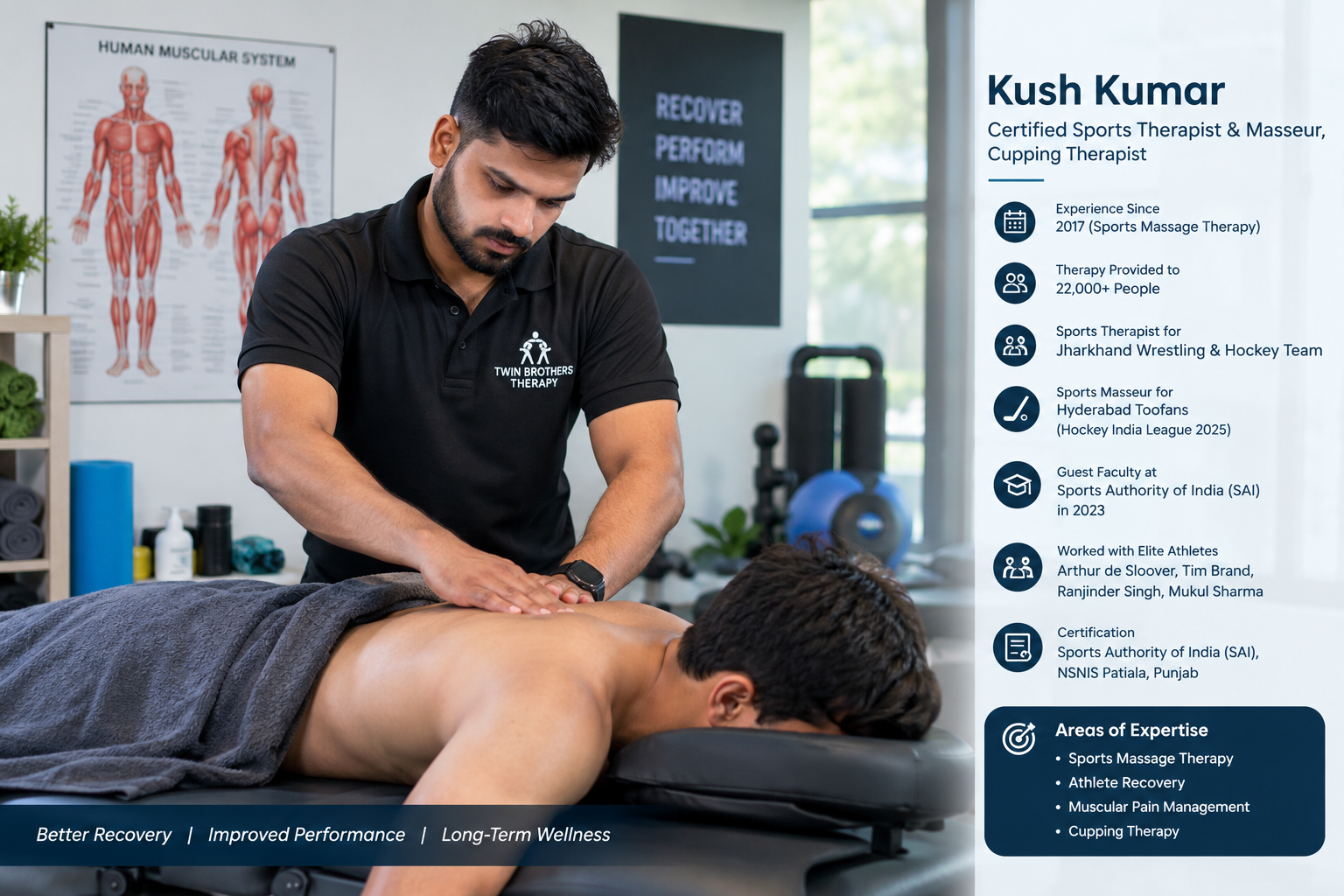
Kush Kumar is presented in the Twin Brothers Therapy profile as a Certified Sports Therapist and Masseur, as well as a Cupping Therapist. His profile states that he has worked in sports massage therapy since 2017 and has provided therapy to more than 22,000 people.
His reported professional experience includes working as a Sports Therapist for the Jharkhand Wrestling and Hockey Team and as a Sports Masseur for Hyderabad Toofans in the Hockey India League 2025. The profile also identifies him as a Guest Faculty member at the Sports Authority of India (SAI) in 2023.
The profile lists professional work involving athletes Arthur de Sloover, Tim Brand, Ranjinder Singh, and Mukul Sharma. It also describes a professional certification connection involving SAI and NSNIS Patiala, Punjab.
These experiences provide a practical example of how massage therapy can connect with sports environments, athlete support, and professional education. They also highlight the importance of building relevant skills, developing practical experience, and understanding the responsibilities associated with working with different clients.
For aspiring massage therapists, the key lesson is that professional development requires more than learning a collection of techniques. It involves continuous learning, responsible practice, communication, and an understanding of the client's individual needs.
Publication note: Twin Brothers Therapy should verify the exact qualification titles, certification details, affiliations, team roles, dates, client numbers, and athlete associations before publishing these claims.
Career Opportunities in Massage Therapy
Career opportunities depend on a student's training, practical competence, location, and the requirements of the employer or professional setting.
Potential pathways may include:
Wellness centres and spas: Providing appropriate relaxation and wellness massage services.
Fitness and sports facilities: Supporting suitable massage services for physically active clients within the therapist's competence.
Sports environments: Pursuing relevant roles with athletes or teams after obtaining appropriate training and experience.
Independent practice: Establishing a service where permitted, with suitable training, hygiene, consent, recordkeeping, and business procedures.
Teaching and training: Exploring educational roles after gaining the necessary qualifications and experience.
Students should research local employment requirements and confirm whether additional qualifications, registration, insurance, or other permissions are necessary for their chosen pathway.
How to Build a Strong Professional Portfolio
A professional portfolio can help students demonstrate their training and development to prospective employers.
It may include:
Relevant course certificates and qualifications.
A record of supervised practical training.
A list of techniques studied and assessed.
Relevant placement or employment experience.
Professional development activities.
References or testimonials shared with appropriate permission.
Students should never invent experience, exaggerate qualifications, or publish identifiable client information without consent. An accurate portfolio helps establish credibility and makes it easier for employers to understand the student's actual capabilities.
Common Mistakes New Massage Therapists Should Avoid
New therapists may focus heavily on technique while overlooking other parts of professional practice. The following mistakes should be avoided:
Working without appropriate training or supervision.
Applying excessive pressure or ignoring client discomfort.
Failing to ask about relevant health concerns and preferences.
Neglecting hygiene and treatment-room preparation.
Making unsupported promises about pain relief, injury prevention, or recovery.
Diagnosing conditions beyond their professional scope.
Ignoring consent, confidentiality, or professional boundaries.
Misrepresenting certificates, experience, or professional affiliations.
Developing safe habits early can help students prepare for responsible and sustainable professional practice.
Conclusion
Building a career in professional massage therapy requires a combination of knowledge, practical skills, supervised training, communication, and ethical conduct. Students should develop a strong understanding of anatomy, learn appropriate techniques, practise client assessment, and understand the importance of hygiene and consent.
Real-world experience helps turn theoretical knowledge into professional competence. Whether students aim to work in wellness services, fitness facilities, or sports-related settings, they should continue learning and work within the limits of their qualifications.
The professional profile presented by Twin Brothers Therapy, including the reported experience of Kush Kumar, illustrates the connection between practical work, sports environments, and professional development. For aspiring therapists, the priority is to build genuine competence, maintain high professional standards, and put client safety first.
Frequently Asked Questions (FAQs)
1. What skills are required to become a professional massage therapist?
Important skills include knowledge of human anatomy, appropriate massage techniques, communication, client assessment, hygiene, time management, and professional ethics.
2. Is practical training important in massage therapy?
Yes. Supervised practice helps students develop technique, learn safe positioning, receive feedback, and understand how to communicate with clients in real situations.
3. How should I choose a massage therapy course?
Review the curriculum, instructor qualifications, practical training hours, assessment methods, certificate recognition, and any requirements relevant to your intended career.
4. Can massage therapy students specialize in sports massage?
Students can pursue sports massage training after developing the necessary foundation. They should check the specialist course requirements and work within their training and professional scope.
5. What is the role of anatomy in massage therapy?
Anatomy helps therapists understand muscle locations, movement, and the tissues they are working with. This knowledge supports appropriate technique selection and recognition of situations requiring referral.
6. What career opportunities are available after massage therapy training?
Depending on qualifications and local requirements, opportunities may include wellness centres, spas, fitness facilities, sports-related services, independent practice, and eventually suitable teaching roles.
7. How can a new massage therapist gain experience?
Students can look for supervised practical sessions, approved placements, mentorship, and entry-level opportunities that match their qualifications. They should record their learning honestly and protect client confidentiality.
8. Why are consent and professional ethics important?
Consent ensures that clients understand and agree to the session. Professional ethics support privacy, clear boundaries, respectful communication, and responsible care.................
Research and Publication Notes
Primary source: Twin Brothers Therapy client profile supplied for this assignment.
Verify all personal credentials, certification details, employment dates, team associations, and professional achievements before publication.
Confirm that all photographs have appropriate usage permission and that image descriptions accurately represent the images.
If the blog is intended to target Ranchi, add relevant local information only after verifying the details of actual services and locations.
Avoid claiming that massage cures injuries or medical conditions, or that it guarantees injury prevention or athletic recovery.
Review the final page for keyword placement, internal links, mobile readability, and the website's SEO requirements before publishing.
Key Takeaways
- •Professional Massage Therapy
- •Practical Training & Hands-On Experience
- •Human Anatomy & Muscle Knowledge
- •Massage Techniques & Skills
Related Articles
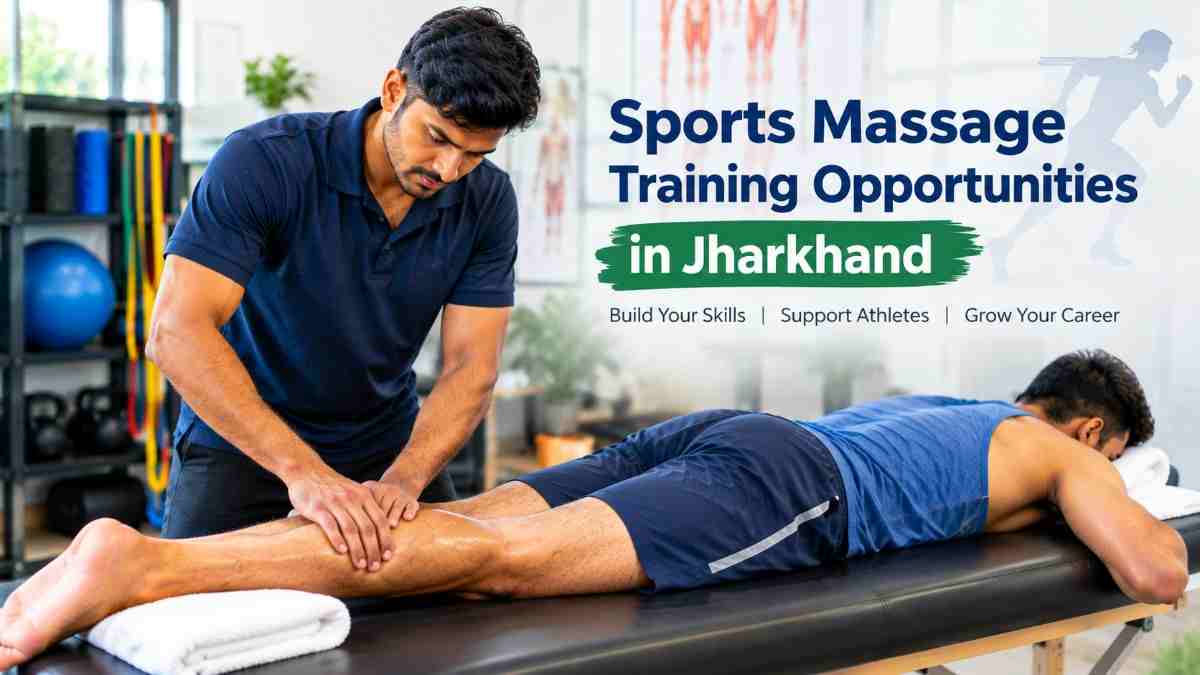
Sports Massage Training in Jharkhand: Courses, Skills & Career Opportunities
Explore sports massage training in Jharkhand, essential skills, course selection, certification checks and career opportunities for aspiring therapists.
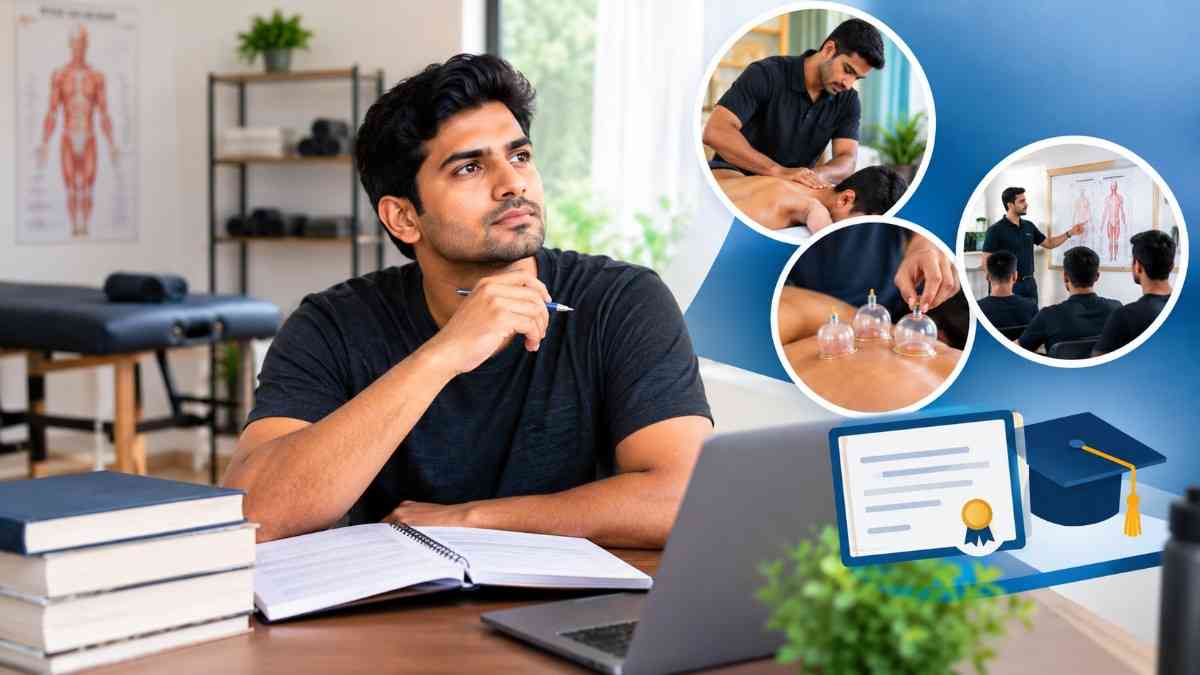
Massage Therapy Certification in India: What Students Need to Know
Learn about massage therapy certification in India, trainer qualifications, practical training, certificate credibility, and how to choose suitable training.
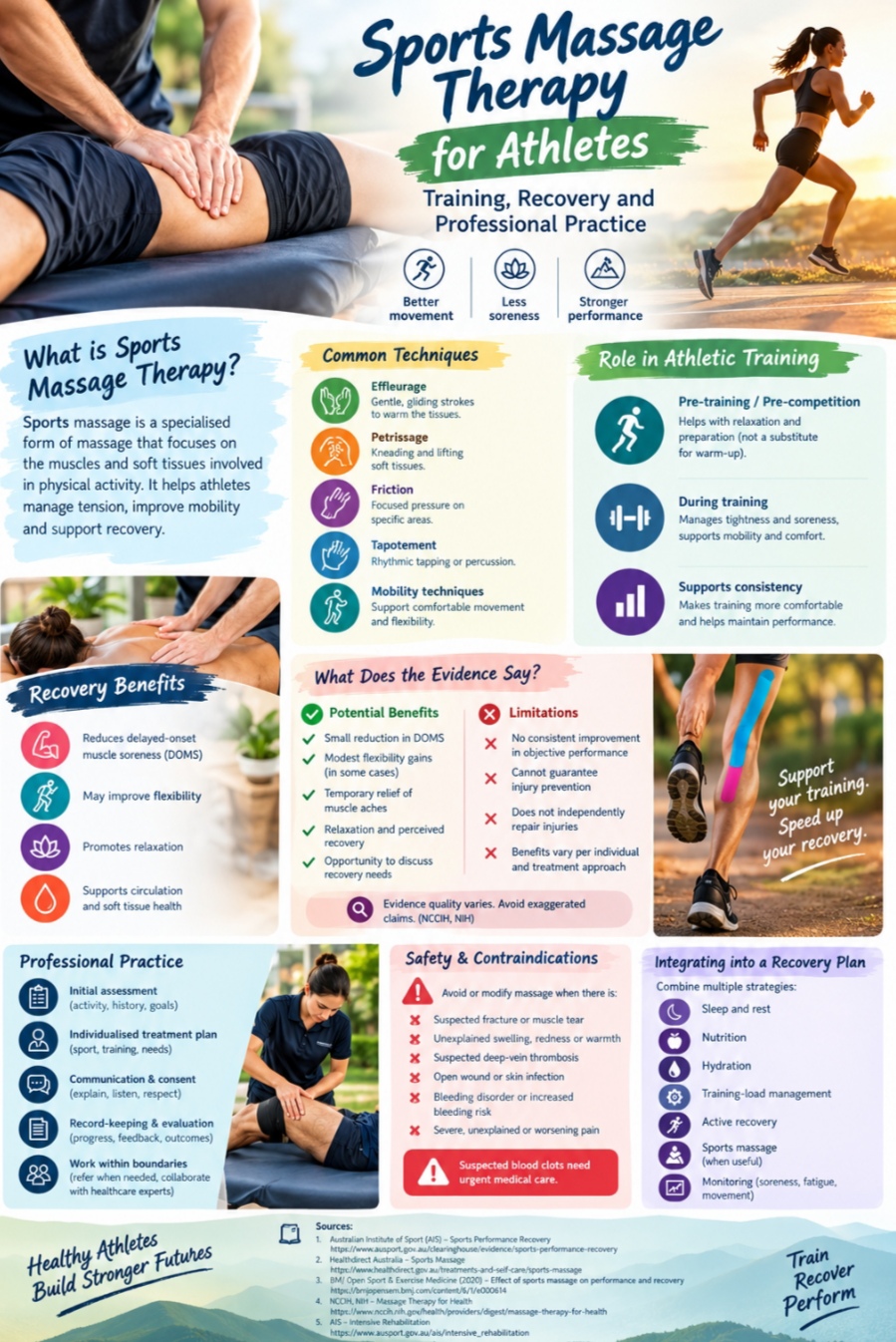
Sports Massage Therapy for Athletes : Recovery and Training
Sports Massage therapy for Athletes: training , Recovery And Professional Practice.Athletes constantly challenge their bodies. Whether a person is pre