Sports Massage Therapy for Athletes : Recovery and Training
- Sports Massage therapy for Athletes: training , Recovery And Professional Practice.

Athletes constantly challenge their bodies. Whether a person is preparing for a marathon, practising football, lifting weights or competing at a professional level, intense physical activity can place considerable demands on muscles and other soft tissues. Training is essential for improving performance, but recovery is equally important.
This is where sports massage therapy for athletes can become a useful part of a broader recovery routine.
What is sports massage?
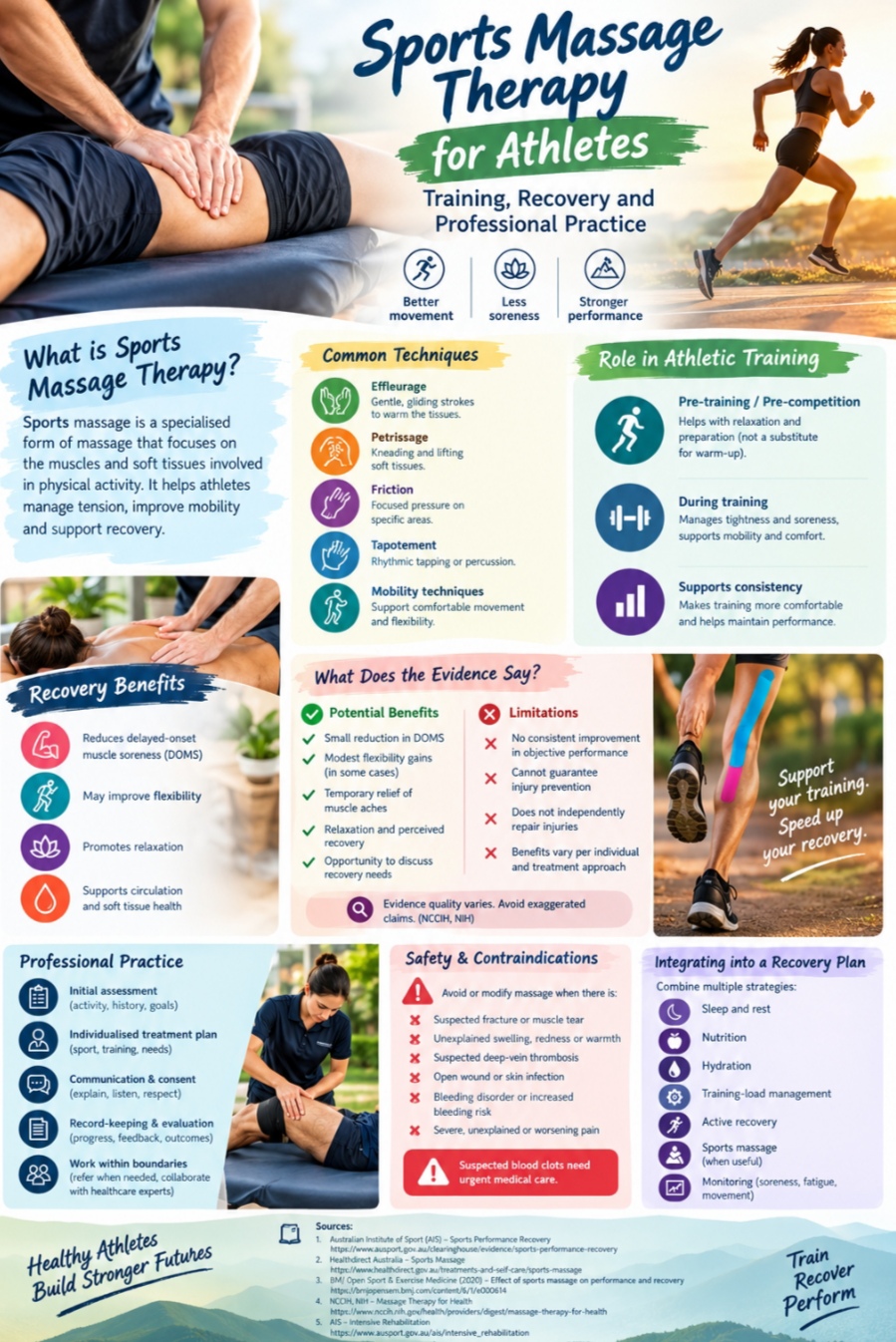
Sports massage is a form of manual therapy that involves working on muscles and other soft tissues using techniques selected according to an athlete’s needs. It is used in recreational fitness, competitive sports and professional athletic environments to support relaxation, manage post-exercise soreness and help athletes feel more comfortable between training sessions.
However, sports massage is not a magic solution for every sports-related problem. Scientific evidence suggests that its benefits vary depending on the outcome being measured. A systematic review published in BMJ Open Sports and Exercise Medicine found small improvements in flexibility and delayed-onset muscle soreness, but no convincing evidence of direct improvements in strength, sprinting, jumping or endurance performance.
Understanding both the benefits and limitations of sports massage helps athletes, coaches and aspiring therapists make informed decisions.
What Is Sports Massage Therapy?
Sports massage therapy is a hands-on approach that focuses on the muscles and soft tissues used during physical activity. Unlike a massage intended primarily for general relaxation, sports massage is often adapted to the demands of a particular sport, an athlete’s training schedule and their recovery needs.
For Example, a runner may experience muscle soreness after a long-distance session, while a weightlifter may feel tightness after repeated strength-training workouts. A therapist may tailor the session to the athlete’s reported symptoms, training history and comfort level.
Sports massage may be used:
- Before exercise as part of an individualised preparation routine.
- Between training sessions to support comfort and relaxation.
- After competition to help manage perceived muscle soreness.
- During a longer training programme as one component of recovery.
- Alongside appropriate healthcare guidance when addressing a non-acute musculoskeletal problem.
The purpose is not simply to apply pressure to sore muscles. A responsible practitioner considers the athlete’s overall condition, communicates throughout the session and recognises when massage is unsuitable.

Benefits of sports massage therapy:-
1. Reduce Delayed-onset muscle soreness
Delayed-onset muscle soreness, commonly called DOMS, refers to the discomfort and stiffness that can develop after unfamiliar or demanding exercise. It often becomes noticeable several hours after a workout and can persist for a few days.
Sports massage may help some athletes experience less soreness following exercise. The systematic review by Davis and colleagues examined 29 studies involving 1,012 participants and found a small but statistically significant benefit for DOMS.
The benefit should not be exaggerated. Massage does not guarantee immediate recovery, eliminate all muscle soreness or prove that damaged tissue has healed.
For athletes, the practical goal is to manage discomfort while allowing the body sufficient time to recover.
2. Sports Flexible and Comfortable Movements
Flexibility is important in many sports, including gymnastics, athletics, football, dance and martial arts. Athletes need sufficient movement at the relevant joints to perform sport-specific actions comfortably.
Sports massage may produce modest improvements in flexibility, although results differ between individuals and techniques.
A therapist may use appropriate soft-tissue techniques to help an athlete feel less restricted. However, massage should not replace sport-specific mobility exercises, stretching when appropriate, or rehabilitation prescribed by a qualified professional.
Improved flexibility also does not automatically mean an athlete will run faster, jump higher or become stronger.
3. Promotes Flexibility and Preceived Recovery.
Physical training can be mentally demanding as well as physically tiring. Competition pressure, demanding schedules and expectations may leave athletes feeling tense.
A comfortable massage session may promote relaxation and improve an athlete’s perception of recovery. This can be valuable when considered alongside adequate sleep, rest and psychological support.
Nevertheless, feeling relaxed after a massage is not the same as being physiologically ready for another intense workout. Athletes should continue to follow their training plans and recovery indicators rather than relying on how they feel immediately after treatment.
4. Improve comfort Between training sessions.
Athletes sometimes experience muscular discomfort after repetitive movements or high training loads. A suitable massage session may help them feel more comfortable.
The approach must remain individualised. A long-distance runner, a swimmer and a strength athlete may have different needs, and the same technique may not be appropriate for everyone.
Persistent, severe or unexplained pain requires proper assessment instead of repeated massage sessions.
For most athletes,these foundation should receive priority:
- Sleep and Rest: Allow adequate time for physical and mental recovery.
- Nutrition: Consume sufficient energy and a balanced diet that supports training demands.
- Hydration: Replace fluids appropriately before, during and after exercise.
- Training management : Avoid increasing training intensity or volume too rapidly.
- Actively recovery : Use suitable low-intensity movement when appropriate.
- Professional Support : Consult qualified sports medicine or physiotherapy professionals for injuries or persistent symptoms.
Massage cannot compensate for inadequate sleep, insufficient food, dehydration or excessive training.
Common sport massage techniques:
Different techniques may be used depending on the athlete’s condition, the purpose of the session and the practitioner’s training. There is no single technique that works best for every athlete.
1.Effleurage
Effleurage involves smooth, gliding strokes across the skin and soft tissues. It is commonly used to begin or end a massage session and can help the athlete become comfortable with the therapist’s touch.
Pressure should be adjusted to the athlete’s comfort and the area being treated.
2.Petrissage
Petrissage includes movements such as gentle kneading and lifting of soft tissues. A trained practitioner may use it to address muscular tightness and promote relaxation.
It should not be performed aggressively on painful, injured or otherwise unsuitable tissues.
3. Friction techniques
Friction involves more localised movements applied to selected soft-tissue areas. Its suitability depends on the purpose of treatment, the practitioner’s competence and the athlete’s condition.
It should not be used indiscriminately over an acute injury or a painful area without appropriate assesment.
4. Compression
Compression applies controlled pressure to selected muscles or soft tissues. A therapist may adapt it for comfort and the demands of a particular sport.
Excessive pressure is not a sign of better treatment. Painful or forceful techniques can make an athlete less comfortable and may be inappropriate in certain conditions.
5. Sport- Specific Soft tissue work
A practitioner may adapt their approach to the athlete’s sport, such as considering the demands placed on the calves of runners or the shoulders of swimmers.
The aim is to provide appropriate, individualised care rather than to follow a fixed routine for every client.
Safety precautions :When should Athelets avoid massage?
Sports massage is not appropriate for every situation. Applying pressure to an injury without proper assessment may worsen symptoms or delay necessary treatment.
An athlete should seek medical advice before massage when there is significant pain, unexplained swelling, suspected fracture, a possible muscle tear, a suspected blood clot, fever, skin infection or another concerning medical problem.
Seek urgent medical care for symptoms such as severe or rapidly worsening pain, a visibly deformed limb, inability to bear weight after a significant injury, chest pain or sudden breathing difficulty.
A qualified practitioner should also take a relevant medical history, explain the proposed treatment, obtain informed consent and respect the athlete’s comfort and privacy. Athletes should feel able to ask questions or stop a session at any time.
For injury-related concerns, a sports physician or qualified physiotherapist can determine whether massage is appropriate and whether further investigation or rehabilitation is required.
Professional Practice: What does a sports massage therapists do?
Sports massage therapists may work with recreational athletes, fitness enthusiasts, sports clubs or professional teams, depending on their qualifications, experience and local employment requirements.
Their responsibilities may include:
- Discussing the athlete’s goals, training routine and relevant health history.
- Identifying circumstances in which massage is unsuitable.
- Explaining the purpose and limitations of the proposed session.
- Selecting techniques within their training and scope of practice.
- Monitoring the athlete’s comfort and adjusting pressure when needed.
- Maintaining hygiene, confidentiality and professional boundaries.
- Recording relevant session information where appropriate.
- Referring athletes to qualified healthcare professionals when symptoms suggest an injury or medical problem.
A sports massage therapist should not claim to diagnose or treat conditions beyond their professional scope. Working alongside coaches, sports physicians and physiotherapists can support a more responsible approach to athlete care.
Conclusion:
Sports massage therapy for athletes can be a useful addition to a well-planned recovery routine. It may help reduce post-exercise soreness, support flexibility and promote relaxation, but it should not be presented as a guaranteed way to improve athletic performance or prevent every injury.
Athletes benefit most when massage is combined with appropriate training, nutrition, hydration, rest and professional medical care when necessary. Students interested in this field should select training programmes based on verifiable credentials, supervised practical education and clear professional boundaries.
Ultimately, effective sports recovery is not about relying on one technique. It is about understanding the athlete, applying appropriate methods and making informed decisions that support long-term health and performance.

Frequently Asked Questions (FAQs)
1. What is sports massage therapy for athletes?
Sports massage therapy is a hands-on approach that works on muscles and other soft tissues to support comfort, relaxation and recovery around physical activity. Techniques are selected according to the athlete’s needs and the practitioner’s competence.
2. Does sports massage help athletes recover faster?
It may help reduce perceived soreness and modestly improve flexibility. However, research does not establish that sports massage consistently improves strength, sprinting, jumping or endurance performance. Recovery also depends on sleep, nutrition, hydration and training management.
3. Is sports massage suitable before a competition?
It may be suitable for some athletes when appropriately tailored, but the response varies. Athletes should avoid experimenting with unfamiliar or intense massage immediately before an important event and should maintain their usual warm-up routine.
4. How often should an athlete get a sports massage?
There is no universally appropriate frequency. It depends on the sport, training load, individual response, goals and any relevant medical considerations. A qualified practitioner can help determine whether sessions are useful.
5. Can sports massage treat a sports injury?
Sports massage should not be considered a substitute for injury assessment or evidence-based rehabilitation. Suspected fractures, significant muscle tears, severe pain or unexplained swelling require appropriate medical evaluation.
References:-
Australian Institute of Sport ( AIS)-Sports Performance Recovery.
https://www.ausport.gov.au/clearinghouse/evidence/sports-performance-recovery.
Key Takeaways
- •1. Sports massage is a hands- on therapy used to support Athletes before or after training and competition .
- •2. It helps to reduce delayed - onset muscle soreness ( DOMS), improve flexibility and promote relaxation.
- •3. Sports massage should complement, not replace ,proper nutrition, hydration ,sleep and structured training.
- •4. Massage techniques should be adapted to the Athlete's sport, training load and individual needs
Related Articles
Sports Massage Training in Jharkhand: Courses, Skills & Career Opportunities
Explore sports massage training in Jharkhand, essential skills, course selection, certification checks and career opportunities for aspiring therapists.
Massage Therapy Certification in India: What Students Need to Know
Learn about massage therapy certification in India, trainer qualifications, practical training, certificate credibility, and how to choose suitable training.
Essential Skills Every Professional Massage Therapist Needs to Master
Want to excel in your massage career? Discover the essential technical, communication, and professional skills required to become a standout, trusted massage therapist.