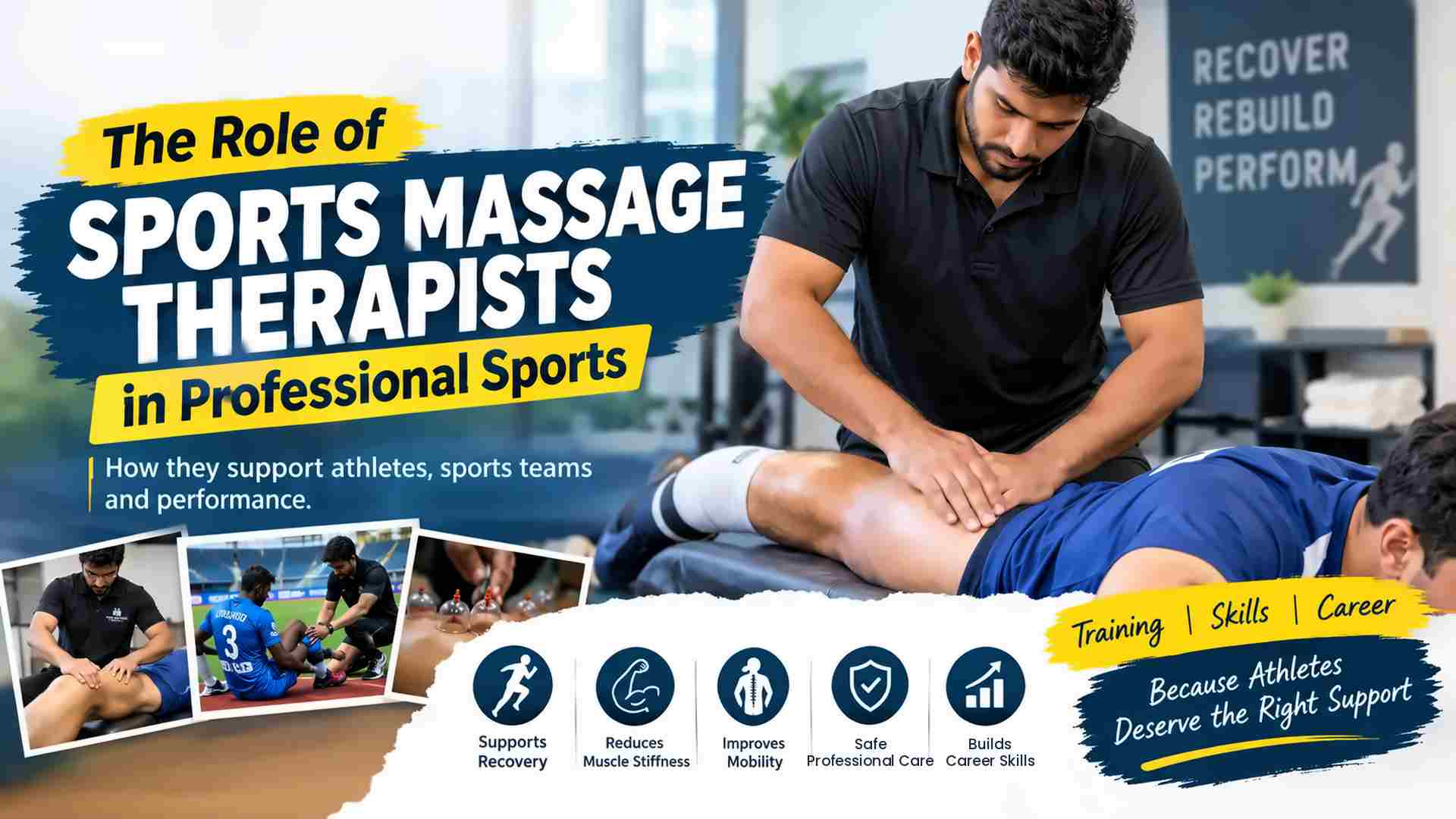
The Role of Sports Massage Therapists in Professional Sports
Watch a professional hockey match and your eyes follow the ball, the drag-flick and the
goalkeeper's dive. What you rarely notice is the person near the bench with a towel, a bottle of
oil and a folding massage table. Yet across a long tournament, that person has a real say in how
fresh a squad feels on day twenty compared with day one.
Professional athletes spend years building strength, speed and skill, and every training session
and match places repeated demands on their muscles. Managing those demands is part of
serious preparation, and sports massage therapists are one of the people who help with it. This
guide explains what they actually do, the skills and safety standards the job requires, what the
research says about massage, and how students in Ranchi and across Jharkhand can start on
this career path.
What Is a Sports Massage Therapist?
A sports massage therapist uses hands-on soft-tissue techniques to help athletes prepare for
activity and recover after it. Unlike a general relaxation massage, the work is planned around
the athlete's training schedule, competition calendar and the muscles their sport loads most.
A hockey player who sprints and turns in a low, bent stance will often feel it in the calves,
hamstrings, hips and lower back. A wrestler may place heavy demands on the shoulders, neck
and legs. A good therapist adapts to each athlete rather than repeating the same routine for
everyone.
It also helps to be clear about the boundaries. A sports massage therapist is not a doctor or a
physiotherapist. They do not diagnose injuries or treat medical conditions. Sports massage is a
supportive service that sits alongside medical care, physiotherapy, strength and conditioning,
rest and good nutrition, never in place of them.
Where Sports Massage Therapists Work in
Professional Sport
Franchise leagues
Leagues such as the Hockey India League bring Indian and international players together for a
short, intense season. The 2024-25 edition ran from 28 December 2024 to 1 February 2025,
with matches in Rourkela and at Ranchi's Marang Gomke Jaipal Singh Munda Stadium. When a
team plays every few days, recovery between matches becomes a daily job, not an occasional
extra.
State and national teams
State associations and national camps bring in masseurs for training camps and competitions.
Here the therapist often works with the same athletes for months and gets to know each player's
body and preferences well.
Sports Authority of India centres
The Sports Authority of India (SAI) engages masseurs on contract at its centres. Its recruitment
notices have asked for 10+2 along with a certificate or skill course in massage from a recognised institution.
Clubs, academies and private practice
Many therapists also work with academies, gyms, runners and recreational players, applying the
same skills to active people who are not professional athletes.
Key Responsibilities of a Sports Massage Therapist
Consultation and consent
Every session starts with a short conversation: recent training, areas of discomfort, relevant
health information and pressure preferences. The athlete should understand what will be done,
which areas will be worked on, and that they can ask for a change or stop the session at any
time. This is also the moment to spot warning signs that need a doctor or physiotherapist
instead of massage.
Pre-event preparation
Before a match or a hard training session, massage is usually short, brisk and fairly light. The
goal is to help the athlete feel loose and ready. Deep, slow work just before competition can
leave muscles feeling heavy, so experienced therapists avoid it and make sure the session fits
around the team's warm-up rather than interfering with it.
Post-event recovery
After a match, the pace changes. Strokes become slower and longer, with more time on the
muscle groups the sport loads most. Common techniques include:
● Effleurage: long, gliding strokes used to begin and finish a session.
● Petrissage: controlled kneading and lifting of the muscle.
● Targeted soft-tissue work: focused techniques chosen according to the therapist's
training and the athlete's tolerance.
No technique suits every situation. A skilled therapist knows when to adapt, lighten or stop.
Maintenance during training blocks
Regular sessions during heavy training weeks help the therapist notice areas that stay tight and
track how an athlete responds to workload. These sessions also build trust, which makes
athletes more likely to mention small niggles early.
Working with the support team
Professional teams include coaches, team doctors, physiotherapists and strength and
conditioning staff. A sports massage therapist passes on what they notice, such as a hamstring
that stays tight for three days, unusual swelling or pain that changes with movement, and leaves
diagnosis and rehabilitation decisions to the qualified professionals. Knowing when not to
massage, and when to refer, is as important as knowing how to massage.
How Sports Massage Supports Recovery, and Where It
Stops
Research gives a balanced picture. A 2018 meta-analysis of 99 studies in Frontiers in Physiology found massage to be the most effective of the common recovery methods for
reducing delayed onset muscle soreness (DOMS) and perceived fatigue. A 2020 systematic
review in BMJ Open Sport & Exercise Medicine, covering 29 studies and 1,012 participants,
found small improvements in flexibility and DOMS, but no evidence that massage directly
improves strength, sprinting, endurance or fatigue measures.
In practice, that means massage can help athletes feel more comfortable, move more freely and
relax between demanding sessions. Many athletes also value it simply as calm time to focus on
recovery. What massage cannot do is guarantee injury prevention, replace medical treatment or
directly boost performance. A responsible therapist explains this honestly, and treats massage
as one part of a recovery routine that also includes sleep, nutrition, hydration and sensible
training load.
A Typical Match Day With a Professional Team
Every team works differently, but a match day often follows a pattern like this one:
1. Morning check-in: short conversations with players about how they slept and where they
feel tight.
2. Pre-match preparation: brief, light sessions for players who want them, well before
warm-up.
3. During the match: standing by with the medical staff to help with cramps or stiffness at
breaks.
4. Post-match recovery: longer, calmer sessions, prioritising players who played the most
minutes.
5. Reporting: passing notes to the physiotherapist about anything unusual.
6. Next day: lighter maintenance work as the team prepares for the next fixture.
Safety and Professional Responsibilities
Working with athletes requires sound judgement as much as good hands. A responsible sports
massage therapist obtains informed consent, follows strict hygiene and equipment-cleaning
routines, keeps athlete information private, and adjusts pressure to the individual. When working
with young athletes, they also follow the organisation's safeguarding rules.
Massage should not be done over a suspected fracture, a fresh serious injury, an open wound,
or an area of unexplained swelling, and not when the athlete has a fever. Sudden severe pain,
significant swelling or signs of a possible blood clot need medical assessment, not massage.
The same care applies to cupping and other complementary techniques, which require specific
training and should never be described as guaranteed treatments.
Skills Every Sports Massage Therapist Needs
● Anatomy and body mechanics: knowing where each muscle starts and ends, what it
does and how the sport loads it.
● Practical skill: correct pressure, positioning and draping, built through supervised
practice rather than theory alone.
● Sport-specific understanding: a hockey player, a wrestler and a cricketer stress their
bodies in very different ways.
● Communication: asking the right questions and explaining the session clearly; teams
often mix players from many countries, so English and Hindi both help in India.
● Stamina and adaptability: long days, travel and back-to-back sessions are part of
tournament life.
● Ethics and discretion: working within your training, keeping records accurate and
keeping athlete information inside the team.
Learning From the Field
Classroom training gives you the foundation, but team environments teach things a textbook
cannot. Kush Kumar, a Ranchi-based Certified Sports Therapist & Masseur and Cupping Therapist certified through SAI NSNIS Patiala, has worked in sports massage since 2017. He
was sports masseur for Hyderabad Toofans in the Hockey India League 2024-25 season, a
squad that reached the final and included players such as Arthur de Sloover, Tim Brand, Mukul
Sharma and Rajinder Singh. He has also worked as sports therapist for the Jharkhand wrestling
and hockey teams and served as guest faculty at the Sports Authority of India in 2023.
Work like this shows students a few things clearly. A professional squad has very little time
between matches, so sessions must be efficient. Each player has different preferences and
different problem areas. And a therapist's value comes as much from observation,
communication and judgement as from the massage itself.
How to Become a Sports Massage Therapist in India
1. Complete your schooling. SAI's masseur recruitment has asked for 10+2, so finishing it
keeps more doors open.
2. Start with a basic course. Choose a massage or sports massage course from a
recognised institution with plenty of supervised practical work. Check the curriculum,
practical hours, trainer qualifications, assessment method and the exact certificate
awarded.
3. Move to advanced training. SAI NSNIS Patiala offers an Advance Sports Massage
Course delivered with the London School of Massage. It runs for two weeks offline with 60
teaching hours, 49 of them practical, and is open to candidates aged 18 to 45 who have
passed a basic sports massage course.
4. Get supervised experience. Assist an experienced therapist at local clubs, academies or
events before handling athletes on your own.
5. Keep learning. Anatomy, stretching, taping and recovery science keep developing, and
athletes notice therapists who stay current.
Career Scope for Sports Massage Therapists
Trained sports massage therapists can work with franchise and state teams, SAI centres, sports
academies, fitness centres, recovery and wellness clinics, and in private practice. Some
combine team work during tournament seasons with a private clinic for the rest of the year, and
some go on to further study in sports science or physiotherapy.
Be realistic about the path. A short course on its own does not lead straight to an elite team;
employers look for proven practical skill, experience and references, and a massage certificate
does not authorise anyone to diagnose or treat medical conditions. For students in Ranchi, the
city's role as a host of national hockey events and Jharkhand's strong sporting culture mean
chances to observe and assist exist close to home.
Conclusion
Sports massage therapists are a quiet but important part of professional sport. They prepare
athletes before competition, support recovery after it and act as an early warning system for the
medical team. The role needs sound anatomy knowledge, careful hands, honest communication
about what massage can and cannot do, and the judgement to know when massage is not the
answer.
If you are a student considering this path, or an athlete looking for recovery support in Ranchi,
Twin Brothers Therapy is happy to guide you with practical, experience-based advice.
Written by: Sujata
Key Takeaways
- •Sports massage therapists help athletes prepare before matches and recover after them.
- •They work alongside physiotherapists, doctors and coaches, and refer injuries to the medical team.
- •Research shows small benefits for muscle soreness and flexibility, but no direct boost to strength or speed.
- •Consent, hygiene and knowing when not to massage are core professional skills.
- •Kush Kumar, a Ranchi-based certified sports therapist, has worked with Hockey India League and Jharkhand state teams.
Related Articles
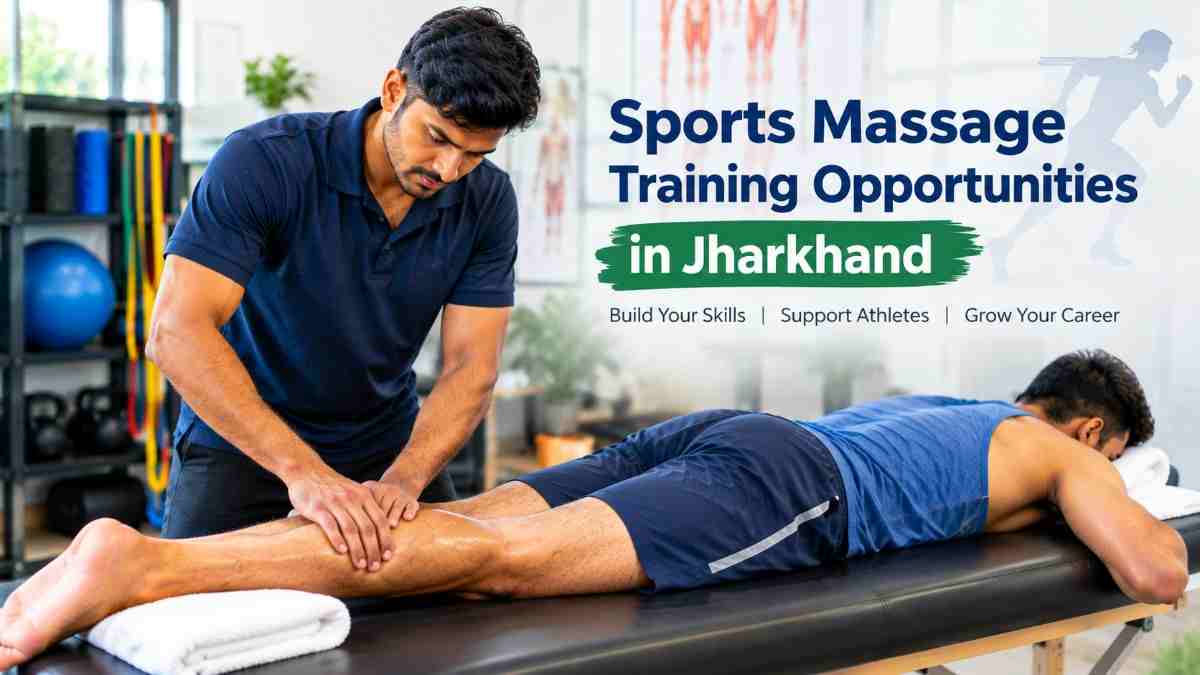
Sports Massage Training in Jharkhand: Courses, Skills & Career Opportunities
Explore sports massage training in Jharkhand, essential skills, course selection, certification checks and career opportunities for aspiring therapists.
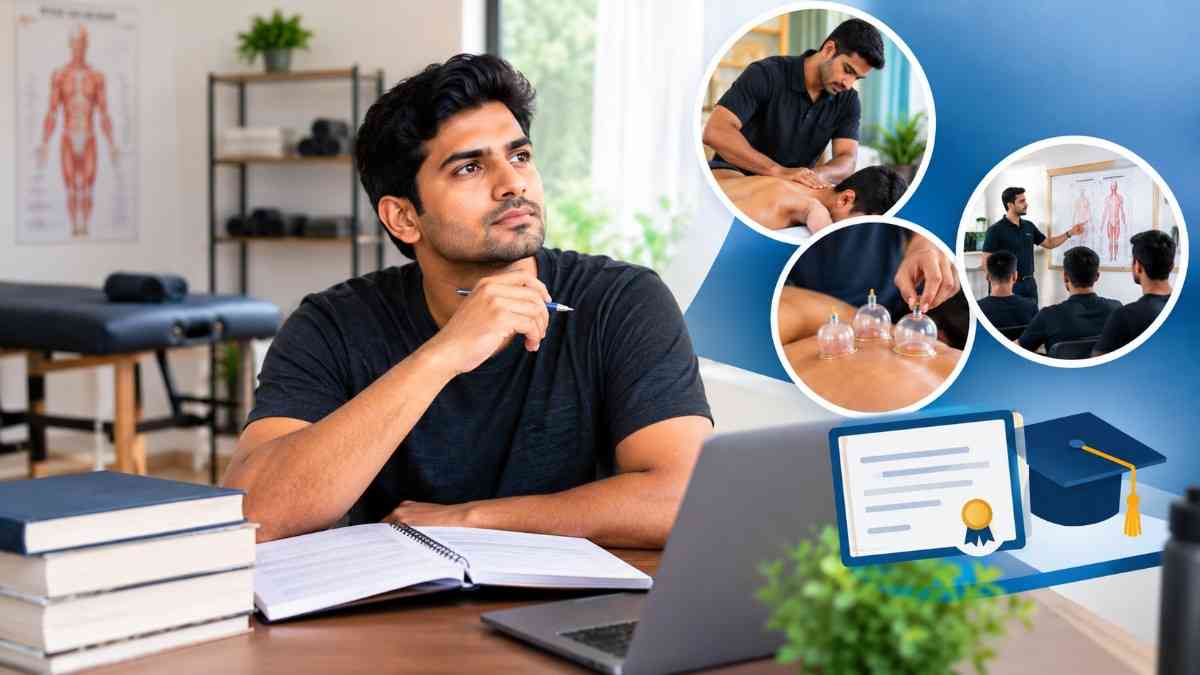
Massage Therapy Certification in India: What Students Need to Know
Learn about massage therapy certification in India, trainer qualifications, practical training, certificate credibility, and how to choose suitable training.
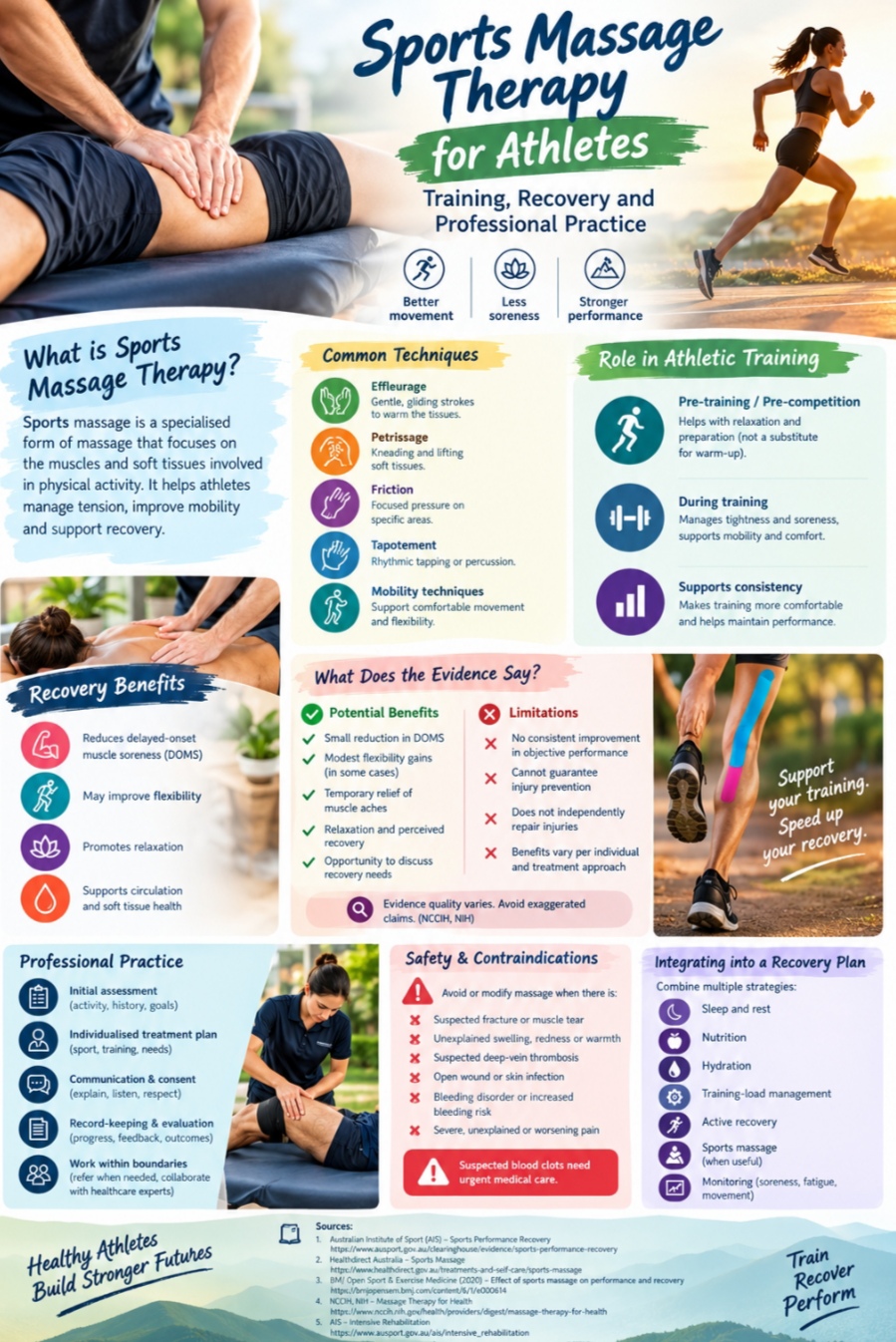
Sports Massage Therapy for Athletes : Recovery and Training
Sports Massage therapy for Athletes: training , Recovery And Professional Practice.Athletes constantly challenge their bodies. Whether a person is pre