How to Become a Professional Sports Massage Therapist in Jharkhand
How to Become a Professional Sports Massage Therapist in Jharkhand
Beginner-Friendly Career Pathway for Aspiring Sports Massage Therapists
Introduction
Have you ever wondered who helps athletes look after their muscles after a demanding training session or an intense match? Along with coaches, fitness professionals and healthcare specialists, trained sports massage therapists can play a role in supporting an athlete's physical recovery.
Sports massage therapy is an area worth exploring for people who are interested in sports, fitness, human anatomy and hands-on professional work. In Jharkhand, beginners who want to enter this field should start by understanding the profession, researching suitable training programmes and learning the skills needed to work safely with clients.
However, becoming a sports massage therapist is not simply about learning a few massage techniques. It requires patience, practical training, knowledge of the human body and a responsible attitude towards client safety.
If you are considering this career, this guide will help you understand where to begin, what to learn and how to make informed decisions about your professional future.
 What Does a Sports Massage Therapist Do?
A sports massage therapist works with muscles and other soft tissues using appropriate hands-on techniques. The approach may vary according to the client's physical activity, comfort, goals and the therapist's training.
For example, a runner may experience muscle stiffness after a long training session, while a hockey player may need an appropriate recovery routine after a demanding match. A trained therapist may use suitable soft-tissue techniques as one part of a broader approach to physical recovery.
The therapist must understand the limits of their role. Sports massage does not replace medical diagnosis, emergency treatment or rehabilitation provided by appropriately qualified healthcare professionals.
A responsible therapist also knows when not to perform a massage and when a client should seek medical advice.
Step 1: Understand Whether This Career Suits You
Before choosing a course, think about what attracts you to sports massage therapy.
Do you enjoy learning about the human body? Are you interested in sports and physical fitness?Are you comfortable communicating with different people and following professional hygiene and safety practices?
These questions can help you decide whether the profession suits your interests.
A sports massage therapist needs more than physical strength. Patience, observation, communication and the ability to follow instructions are equally important. Therapists must also respect privacy, obtain consent and respond appropriately to client feedback.
You do not need to know everything before starting. What matters is being willing to learn and practise under proper supervision.
Step 2: Learn the Basics of Human Anatomy
One of the first things an aspiring therapist should study is human anatomy. Understanding the body helps explain why massage techniques must be selected carefully rather than applied in the same way to everyone.
The muscular system
Learn about major muscle groups, their locations and their roles in movement. Understanding how muscles work can help you develop a stronger foundation for further training.
The skeletal system
Bones and joints support movement and provide structure to the body. Basic knowledge of the skeletal system helps students understand how muscles relate to different movements.
Basic physiology and movement
Students should learn how the body responds to exercise, physical activity and rest. An introductory understanding of movement and biomechanics can also help explain the physical demands of different sports.
Safety and warning signs
Anatomy education should be accompanied by learning about situations in which massage may be unsuitable. Severe or unexplained pain, significant swelling, suspected fractures and other concerning symptoms may require medical assessment.
Online videos can help introduce these subjects, but they should not replace structured education or supervised practical training.
Step 3: Research Sports Massage Training Courses
Once you understand the basics of the profession, the next step is to research training opportunities.
Students in Jharkhand may begin by looking at providers in Ranchi and other nearby locations. They can also investigate programmes offered by recognised sports education institutions elsewhere in India.
One official source is the Netaji Subhas National Institute of Sports (NSNIS), Patiala, which is part of the Sports Authority of India. Its official website lists Basic Sports Massage and Advanced Sports Massage among its skill development programmes.
The Advanced Sports Massage course has specific eligibility requirements, including previous Basic Sports Massage training from an accepted provider. Therefore, beginners should check whether they meet the requirements before applying.
You can start your research through these official websites:
NSNIS Patiala: https://nsnis.org/ - Sports Authority of India: https://sportsauthorityofindia.gov.in/sai_new/nsnis-patiala
NSNIS online application portal: https://www.smc.nsnis.in/
These websites can help you understand the types of programmes available. Current admission dates and eligibility should always be checked directly with the institution.
For local training options in Jharkhand, contact providers directly and ask for written details before making any payment.
 Step 4: Choose the Right Training Programme
Choosing a course deserves careful thought. A course may look attractive in an advertisement, but the most important question is what you will actually learn.
Before enrolling, compare the following factors.
Course syllabus: Does the programme cover anatomy, massage techniques, hygiene, client communication and safety?
Practical training: Will you have opportunities to practise techniques under the guidance of a qualified instructor?
Trainer experience: Can the provider explain the trainer's qualifications and relevant professional experience?
Assessment: Does the course assess both theoretical knowledge and practical ability?
Certification: Who issues the certificate, and what does successful completion demonstrate?
Total cost: Ask for the complete fee structure, including any additional charges.
Eligibility: Confirm the educational background, previous training or other requirements for admission.
Student support: Find out whether students receive feedback, guidance and opportunities for further learning.
A trustworthy provider should be willing to answer these questions clearly. Avoid choosing a programme only because it promises quick employment or a guaranteed high income.
Step 5: Develop Practical Skills Through Supervised Learning
Reading about massage techniques is useful, but practical training is essential for developing professional competence.
Under suitable supervision, students may learn how to position a client comfortably, prepare the treatment area, maintain hygiene and use appropriate basic soft-tissue techniques.
They should also learn how to adjust their approach according to client feedback and the limits of their training.
Good practical education includes more than technique. Students need to understand consent, professional boundaries, safe body mechanics and the importance of stopping when something feels wrong.
For example, if a client reports sharp pain during a session, a therapist should not simply apply more pressure. The therapist should stop, reassess the situation within their competence and recommend appropriate medical evaluation when necessary.
Beginners should never attempt advanced techniques on clients simply because they have watched a video or observed another practitioner.

Step 6: Learn Client Safety and Professional Ethics
Trust is an important part of any hands-on profession. Clients need to feel comfortable, respected and informed throughout a session.
Before beginning, a therapist should explain what the session involves, discuss relevant precautions and obtain the client's consent. Clients should be able to ask questions and request that the session stop at any time.
There are situations in which massage may need to be avoided or postponed. Suspected fractures, acute injuries, unexplained swelling and possible blood clots require particular caution and appropriate medical assessment.
Sports massage therapists should not diagnose diseases, promise to cure injuries or advise clients to ignore medical symptoms. They must work within their qualifications and refer clients to suitably qualified healthcare professionals when needed.
Professional ethics also includes maintaining cleanliness, protecting confidential information, keeping appropriate records and treating every client with respect.
Step 7: Gain Experience and Continue Learning
After completing appropriate training, the next goal is to build experience responsibly.
Depending on their qualifications and available opportunities, beginners may explore supervised practice, additional workshops or entry-level positions where suitable guidance is provided.
Learning should continue beyond the initial course. Anatomy, movement science, communication and safe practice are subjects that professionals can keep developing throughout their careers.
It can be helpful to maintain a personal learning record. Write down the subjects you have studied, the techniques you have practised under supervision and the areas where you need more guidance.
Always protect client privacy when recording professional learning experiences. Do not share identifiable client details or photographs without appropriate permission.
Experience takes time to develop. Rather than rushing into independent practice, focus on building reliable skills and knowing the limits of your competence.
Step 8: Explore Career Opportunities in Jharkhand
Sports massage training may help people explore different professional environments, depending on their qualifications, experience and the requirements of individual employers.
Sports teams and athletic environments
Some experienced therapists may pursue opportunities supporting athletes or sports teams. These roles may require strong practical skills, an understanding of sporting demands and the ability to work alongside coaches and healthcare professionals.
Gyms and fitness centres
Fitness facilities may offer opportunities to work with physically active clients. Applicants should check whether their qualifications and experience meet the employer's expectations.
Wellness and massage centres
Some professionals may explore roles in wellness establishments that provide massage services. The work should remain within the therapist's training and the establishment's standards.
Independent practice
With suitable skills, experience and an understanding of applicable requirements, a therapist may eventually consider independent practice. This also requires professional communication, transparent service information, appropriate facilities and responsible business planning.
These are possible career directions, not guaranteed job outcomes. Students should research actual vacancies and speak with employers to understand local requirements before making decisions.
 Step 9: Build Communication and Professional Skills
A good therapist must be able to listen as well as use practical techniques.
Clients may describe discomfort in different ways, so clear communication helps a therapist understand their concerns and explain what can reasonably be offered.
Professional habits also matter. Arriving on time, maintaining clean equipment, respecting privacy and explaining the limits of a service all help create a responsible working environment.
In Jharkhand, the ability to communicate in Hindi and English may be useful in some workplaces, although language requirements vary. Students should also become comfortable explaining basic concepts in simple language.
Learning From Experienced Sports Professionals Learning from experienced practitioners can help students understand how sports massage fits into real professional settings.
Kush Kumar, associated with Twin Brothers Therapy, is described in the client information for this assignment as a sports therapist and masseur with experience in sports massage and work involving athletes.
His professional background provides a relevant example of the connection between massage practice and sports environments. However, students should independently verify course information, professional credentials and training arrangements before making decisions.
The best approach is to combine professional guidance with reliable research, structured education and supervised practice.
Conclusion
Becoming a professional sports massage therapist in Jharkhand starts with a willingness to learn and a clear understanding of the responsibilities involved.
Begin with human anatomy, research suitable courses and compare training providers carefully. Give practical learning and client safety the same importance as technical skills. Check certification details, understand your professional boundaries and seek supervised experience before taking on responsibilities independently.
Career opportunities may exist in sports, fitness, wellness and other suitable settings, but progression depends on qualifications, competence and employer requirements.
You do not need to learn everything in one day. Take the first step, ask the right questions and build your knowledge gradually. A careful, professional approach will give you a stronger foundation for a career in sports massage therapy.
Frequently Asked Questions
1. How can I become a sports massage therapist in Jharkhand?
Start by learning about the profession and basic anatomy. Research suitable training programmes, check their eligibility requirements and choose one that includes appropriate practical instruction. Continue developing your skills through supervised practice and further learning.
2. Are sports massage courses available in Ranchi?
Students should research current local providers and confirm their offerings directly. Ask about the syllabus, trainer qualifications, practical training, assessment and certificate issuer before enrolling.
3. Do I need previous experience to study sports massage?
Requirements depend on the course. Some introductory programmes may accept beginners, while advanced courses can require previous massage training. Always read the current official admission criteria.
4. What subjects should I learn for sports massage therapy?
Important subjects include human anatomy, basic physiology, the muscular and skeletal systems, movement, hygiene, client communication and safety. Students should also learn when massage may be inappropriate and when medical referral is needed.
5. Can a sports massage therapist treat or cure injuries?
Sports massage should not be presented as a cure for injuries or medical conditions. It may form part of a broader recovery approach in appropriate situations, but injuries and concerning symptoms should be assessed by qualified healthcare professionals.
6. Where can sports massage therapists work?
Depending on their training and experience, they may explore sports environments, fitness centres, wellness establishments or independent practice. Each workplace may have different requirements, and completing a course does not guarantee employment.
7. How can I check whether a massage course is trustworthy?
Check the trainer's qualifications, syllabus, practical hours, assessment process, certificate issuer and total fees. Verify important claims through official sources and request written details before paying.
8. Is practical training important for sports massage therapists?
Yes. Supervised practical training helps students learn safe techniques, professional communication, hygiene and appropriate client handling. It also provides an opportunity to receive feedback and correct mistakes before taking on greater responsibilities.
 Image Suggestions and Alt Text
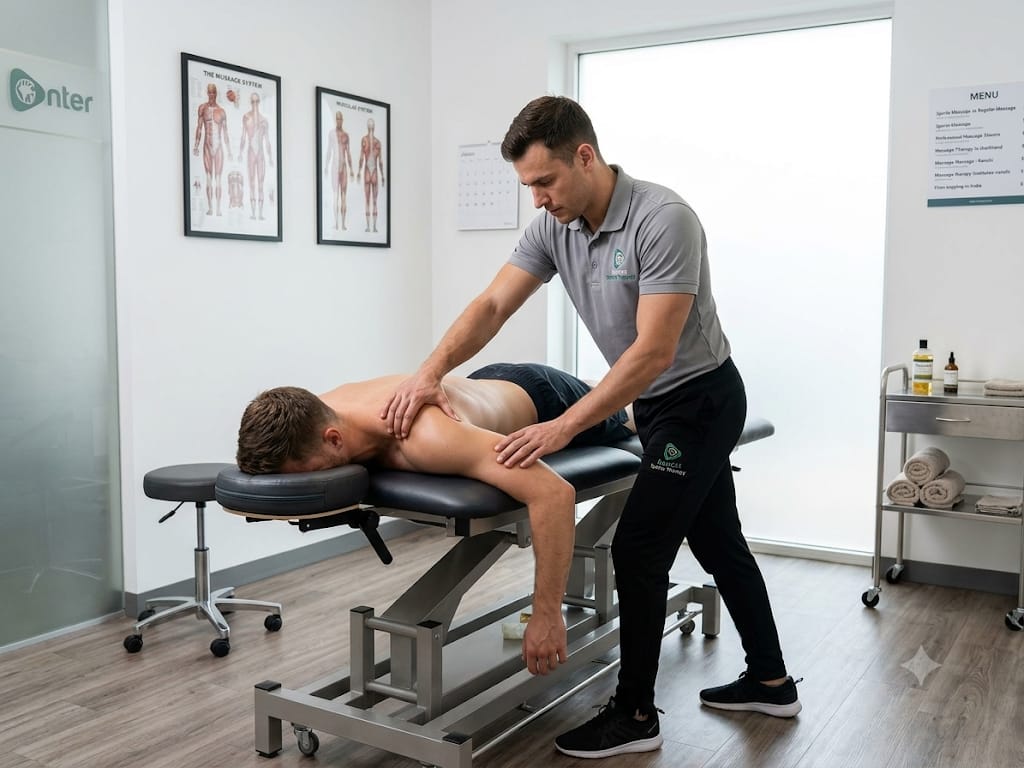
Image 1: Sports massage training
Alt text: Instructor demonstrating a basic sports massage technique during a supervised training session.
Image 2: Human anatomy education
Alt text: Educational illustration showing major human muscle groups for sports massage anatomy study.
Image 3: Sports massage in an athletic setting
Alt text: Trained sports massage therapist working with an athlete in a professional setting.
Image 4: Practical student training
Alt text: Massage students practising basic techniques under the supervision of a qualified instructor.
Image 5: Post-exercise recovery
Alt text: Athlete performing gentle stretching after a sports training session.
Use original, licensed or otherwise authorised images. Obtain appropriate permission before publishing identifiable photographs of clients.
Sources and Further Reading
1. Sports Authority of India — NSNIS Patiala https://sportsauthorityofindia.gov.in/sai_new/nsnis-patiala
2. NSNIS Patiala — Advanced Sports Massage Course https://nsnis.org/academic-courses/advance-sports-massage-course/
3. NSNIS Online Application Portal https://www.smc.nsnis.in/
Course details, eligibility and admission dates may change. Check the official institution's latest information before publishing specific claims or applying for a course.
Key Takeaways
- •Understand the role and responsibilities of a professional sports massage therapist.
- •Learn why human anatomy and basic physiology are important for sports massage
- •Discover how to research sports massage training courses in Jharkhand.
- •Know what to check before choosing a training programme.
- •Understand the importance of supervised practical training.
- •Learn about client safety, hygiene and professional ethics.
- •Explore possible career opportunities in sports, fitness and wellness settings.
- •Discover how to build professional skills and continue learning.
Related Articles
Sports Massage Training in Jharkhand: Courses, Skills & Career Opportunities
Explore sports massage training in Jharkhand, essential skills, course selection, certification checks and career opportunities for aspiring therapists.
Massage Therapy Certification in India: What Students Need to Know
Learn about massage therapy certification in India, trainer qualifications, practical training, certificate credibility, and how to choose suitable training.
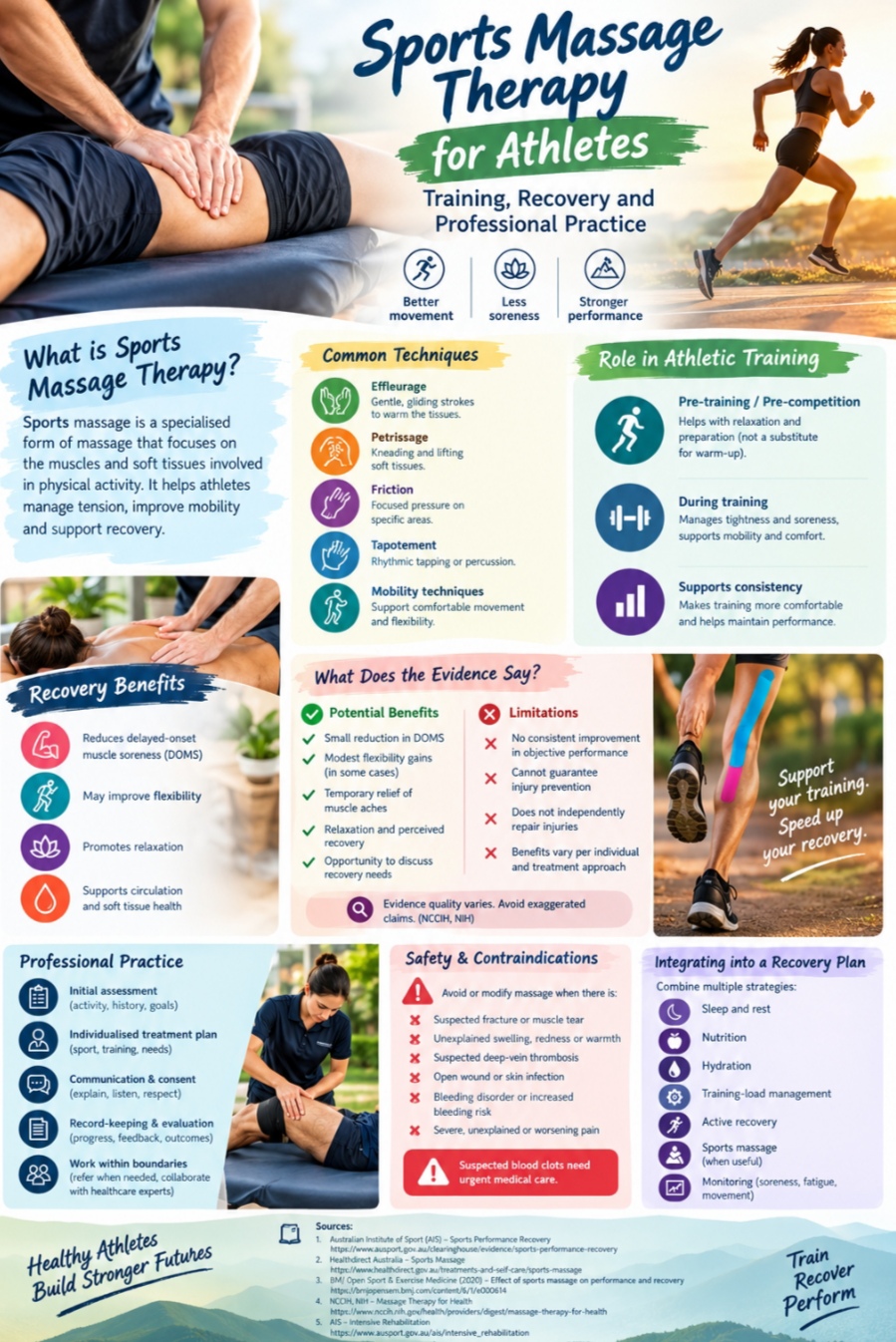
Sports Massage Therapy for Athletes : Recovery and Training
Sports Massage therapy for Athletes: training , Recovery And Professional Practice.Athletes constantly challenge their bodies. Whether a person is pre